In case there are any lingering doubts about who is interested in peace in this region, this should clear everything up.
Israel offered Syria the Golan Heights in exchange for Syria reducing its ties to Iran. Syria, of course, has rejected the Israeli peace offering.
Israel should therefore ignore any further U.N. resolutions regarding a return to the "pre-1967" borders because there is no serious partner for Israel to make peace with--in Syria or amongst the Palestinians.
Israel attempted to comply and the Syrians swatted the offer away. This is predictable and perhaps even sensible from the Syrian perspective. They are benefiting greatly from their alliance with Iran, the rising power in the Middle East, and likely will continue to do so for the foreseeable future. They just recently reached an historic arms agreement with Russia who is once again extending her tentacles into the Middle East. Syria sees herself and her benefactors as the strong horse.
Bashar Assed has clearly wagered that he and Syria's allies (Iran, Hezbollah, etc.) have the upper hand. With the United States behaving in an intractable and irresponsible manner toward its stalwart ally, Israel, these players in the region sense weakness.
And weakness in this part of the world means war.
This is yet another Israeli gesture in a long line of gestures that has gone unappreciated by the West and been rejected by Israel's enemies. From the 1993 Oslo Accords to the 2000 Camp David Summit where Ehud Barak literally offered ninety-eight percent of the West Bank to Arafat to the 2000 Israeli withdrawal from southern Lebanon to the 2005 Israeli withdrawal from Gaza.
Israel extends the metaphorical olive branch and receives a quite literal hand grenade.
Tuesday, May 18, 2010


Sunday, May 2, 2010
The Progress of Delay
Fried Camel has been on a more or less unannounced hiatus for the past few weeks due to impending deadlines for two of our papers. For the History of the Ottoman Empire seminar that our class took last semester, I'm currently writing about the British relationship with the Ottoman Empire at the turn of the 20th Century until the eve of the First World War.
It is with great candor that I admit the excruciating tedium with which this paper is being written. Of all the issues or topics that one could study in the Middle East, I personally find the Ottoman Empire to be quite dull. They were around for nearly six hundred years but had very little impact on the world. The Greeks left us great philosophers and early incarnations of our own political system that remain relevant some two thousand years later. The Romans gave the world the common derivative language of Latin which forms the basis of dozens of languages still in use today--ours chief among them.
The Ottomans gave us fez caps.
Truly, the only thing of great importance that I have been able to ascertain from the legacy of the Ottoman Empire is the composition of the modern Middle East following the Empire's collapse. The British and the French were able to carve the former Ottoman provinces up into mandates which then metastasized into nation states.
In essence, the legacy of the Ottoman Empire, unlike other truly great empires, is its death.
In time, perhaps the gifts of the Ottomans to the world will become more perceptible.
In the interim, their gift to me comes in the form of being required to write about them--a remarkably vapid gift that promises to continue draining valuable hours from my life.
It is with great candor that I admit the excruciating tedium with which this paper is being written. Of all the issues or topics that one could study in the Middle East, I personally find the Ottoman Empire to be quite dull. They were around for nearly six hundred years but had very little impact on the world. The Greeks left us great philosophers and early incarnations of our own political system that remain relevant some two thousand years later. The Romans gave the world the common derivative language of Latin which forms the basis of dozens of languages still in use today--ours chief among them.
The Ottomans gave us fez caps.
Truly, the only thing of great importance that I have been able to ascertain from the legacy of the Ottoman Empire is the composition of the modern Middle East following the Empire's collapse. The British and the French were able to carve the former Ottoman provinces up into mandates which then metastasized into nation states.
In essence, the legacy of the Ottoman Empire, unlike other truly great empires, is its death.
In time, perhaps the gifts of the Ottomans to the world will become more perceptible.
In the interim, their gift to me comes in the form of being required to write about them--a remarkably vapid gift that promises to continue draining valuable hours from my life.
Monday, April 19, 2010
Bereavement and Revival
March 24, 2010
I hustled up the stairs, nearly out of breath, and opened the door to Dustin, Stefan, and Pieter's dorm. In Dustin's room, Liran, one of the five Madrichim (counselors) sat on the edge of Dustin's bed. He had been familiarizing Dustin with all the locations on the Golan Trail and giving him advice for our upcoming hike.
Over the course of the months here, some of us have become pretty good friends with the Madrichim.
"Liran, what's up?" I asked.
A former First Lieutenant in the IDF and a native of Ashkelon, Liran was known for his typical good cheer. Dark-skinned, bespectacled, with close-cropped black hair, and always bearing a grin, Liran had been the most approachable of our Israeli counselors at Tel Aviv University from the very beginning.
Over time that has changed as we have gotten to know the other four: Dvir, Moshe, Almog, and Oshrat.
"I wanted to see if you wanted to take part in a ceremony for Yom Hazikaron," Liran stated with a degree of stoicism unusual for him. "It's Israel's Memorial Day for fallen soldiers and victims of terror attacks. We do this every year and it's very, very important to everyone."
"I'd love to do it," Dustin responded without hesitation.
"It'd be an honor," I followed swiftly.
"Great!" Liran said as the infamous grin returned. "We were all hoping that you would do it. I should tell you though that the week before, we will be practicing every night for several hours. It's a big commitment."
"That's fine," we both answered.
"Excellent."
***
April 11, 2010
The bottom floor of Dorm Building Aleph contained several large rooms that served as makeshift classrooms. I was expecting to find an uninhabitable disaster zone littered with construction material and dust as I walked through the door at 8:00 p.m. Much to my pleasant surprise, it was clean, spacious, and well-lit.
Looks like the eight months of belligerent construction and the din of power tools at 6:00 a.m. finally paid off, I thought in bemusement.
As the only two Master's students participating in the event and at the behest of the Madrichim themselves, Dustin and I took a seat in the chairs ringing the walls. The rest of the students, all undergraduates and all either Americans or dual citizens, started to show up one-by-one.
Unlike the undergraduates from last semester, whom we all got to know very well (i.e. Liz, Mike, Elana, etc.), the new group was relatively unknown to us. In fact, I didn't know a single one of them. And with the exception of two guys carrying guitars, Dustin and I were the only other males.
After everyone had taken their seats and finished gabbing, the Madrichim walked over to begin explaining exactly what it was that we were about to spend a week preparing for.
Oshrat, the head Madrichim, thanked all of us for volunteering and explained that we would be putting on a ceremony for TAU students to be held in the massive complex of Dorm Building G on the eve of Yom Hazikaron. It was an annual event and it involved various readings (both in Hebrew and in English) and songs (all in Hebrew).
Dustin and I generously offered to sing a stirring duet, but Oshrat stubbornly insisted that the songs and singers had already been selected. Instead, we were asked to review the parts that were available and choose what we would like to read.
Or so we thought.
As everyone gathered around the fold-out table to go through the various Hebrew and English readings, Oshrat approached Dustin and I. She had a strange look to her--one that suggested there was more to what was required of us in particular.
"We wanted you to be the ceremony's host," Oshrat said bluntly to Dustin.
"Oh-okay," Dustin responded.
"Can you do that?" she pressed. "You'll have to read in both English and Hebrew."
"Hahaha," I mocked.
"And we wanted you to read 'Yizkor,'" Oshrat said as she spun quickly on her heel to face me.
She handed me a piece of paper with nothing but Hebrew on it. A lot of Hebrew. A lot of hard Hebrew.
"It's very important," she said as she watched the look of poorly disguised horror crossing over my face. "Can you do it?"
Dvir, guitar strapped over his shoulder, strutted up beside Oshrat and I. The most laid back of the all the Madrichim and a ready reserve paratrooper in the IDF, Dvir had an almost Zen-like aura of relaxation about him. Since our excursion to Eilat in December and our epic dance-off, Dvir and I had developed a steady and competitive back-and-forth sarcasm between one another.
"This is actually the most important part to an Israeli. So don't screw this up," Dvir said with a sly grin as he strummed a single hard chord on his guitar.
"So I should probably avoid you, then?" I responded.
"Drew," Oshrat said seriously. "Can you do this?"
"Absolutely," I said before thinking.
"Can you read the first two lines for me?"
So I started and sputtered through what looked to be Hebrew written by the Almighty Himself.
"How was that?"
Oshrat looked sideways and pursed her lips as if trying to buy herself some time.
"It was...acceptable," she lied. "But you've got a week to get it right, so it's okay. And we're going to work with you every night."
She walked away and I turned toward Dustin. He looked like he had just walked into a brick wall as he exhaled sharply in resignation.
"That duet idea isn't sounding so stupid now, is it?"
***
April 12, 2010
It was 8:00 p.m. again. We had spent two hours the night before sounding like the stars of the Hebrew Short Bus. We had spent all day in the classroom. Exhaustion was self-evident.
We were separated by the Madrichim to work on our parts individually for all of the second night. I spent most of the night giving Liran a headache. Oshrat spent most of the night turning Jack Jack Carmack into an ill-tempered sea bass.
"The 'Yizkor' is the most important part of the whole ceremony," Liran explained to me. "It's the remembrance for all of the fallen soldiers of the Israeli Defense Force. It's very important that you say it precisely correct."
I read the first three lines to Liran again. And again. And again.
"How was that?" I asked enthusiastically.
"Do it again," Liran responded tersely.
"That bad, huh?"
Outside of the bottom room in building Aleph, two of the girls practiced their singing parts. I wasn't quite sure if it was humans singing the first time I overheard them. To make an extreme understatement, it was incredible. Better than any of the garbage Americans eat up on American Idol.
Liran seemed to read my thoughts as I lifted my head up.
"They're very good," he said with a nod.
"They're not even Israeli and they're singing in Hebrew," I said distantly, lost for a moment. "That's unbelievable."
"I'm going to read it this time and I want you to listen to how I say everything, the...uh...the song of the words...the...uh," he stammered.
"The cadence and the intonation," I finished for him.
"Exactly."
Behind us, sitting in two black fold-out chairs, Dustin and Oshrat repeated his lines.
"You're saying it wrong," Oshrat stressed to Dustin, who was becoming stressed in his own right.
"Yom Hazikaron," Dustin repeated.
"Yom Hazikaron," Oshrat said again.
"Yom Hazikaron," Dustin repeated.
"Yom Hazikaron," Oshrat said with a smile.
I caught Dustin flashing her an angry glare. Or perhaps it was just one of frustration. The difference was likely a moot point.
"Okay, take a break for a few minutes and I'm gonna go check on the others," Oshrat said as she rushed off.
I had gotten up from my chair and was walking around trying to repeat the way Liran had said the first few lines. One of the girls, Becca, who was also reading in Hebrew, walked over. We had met the day before. She lived in northern California and was a student at UC-Irvine. She was ethnically Persian, which was interesting given the current dynamics going on between Iran and Israel.
"So I completely forgot your name and feel like a complete idiot," she said as she walked over.
"Alex," I quipped.
"I sense deceit," she responded. "It was Da...."
"Drew."
"Where are you from?"
"Alabama," I said with a smile.
"Really? Well your accent is hardly noticeable," Becca responded.
"Really?"
She smirked sarcastically.
"Shut up."
"Well on the bright side, even if your English leaves a lot to be desired, your Hebrew actually sounds pretty good," she offered.
"Well that makes sense seeing as how I don't speak English. I speak American."
"You are definitely from Alabama," she said with a laugh.
***
April 13, 2010
"You keeping rolling your R's when you say Yisrael," Liran said with a bit of incredulity. "You sound Spanish."
"You smell funny," I responded.
Liran shook his head.
"Read the last three lines again."
It was the last day of individual rehearsing. Out of the twenty or so people that had volunteered, or in our case, been asked to do this event, almost everyone had their parts down fairly well.
Everyone except for me and Dustin.
Oshrat, Almog, and Liran were switching off and on between the two of us, having us read for fifteen minutes on and then walk outside thereafter for a few minutes to avoid the impending brain cramp.
Moshe and Dvir were with the guitar players and the singers outside. I imagine that I speak for both Dustin and myself when I say that it was relatively easy to relax in-between reading while listening to those girls singing.
After an hour, everyone gathered together for a brief meeting. I took a seat next to Dustin and Becca and wanted nothing more than to go back to my room and sleep. The Madrichim seemed fairly worn out by this point, which was to say nothing for how I'm sure everyone else felt.
They wanted this thing to be perfect. And it was understandable. As Oshrat informed us the day before, all of the Madrichim knew someone who had been killed in the line of duty or been killed by a terrorist attack.
This ceremony was more than just a memorial for fallen soldiers and for innocent lives lost to Islamist terror. It was representative of the continual price Israelis have to pay for their basic right to exist. It was representative of an ingrained part of Israeli identity: heartbreaking loss and bitter determination to keep moving forward.
In America, the price paid for our way of life, our freedoms, and security is placed on the shoulders of a relative few. In Israel, it is a burden carried by everyone.
For the Madrichim, this was not just a tribute. This was and would always be personal.
Oshrat informed us of the dress code for the ceremony. For the guys, it was a nice white shirt and black pants. For the girls, a white top with black pants or a black skirt.
"This will be the first time I've dressed as an Orthodox Jew," I whispered to Becca.
"And hopefully the last," she whispered in return.
***
April 14-15, 2010
Wednesday and Thursday focused exclusively on rehearsing the actual thing. The ceremony itself was supposed to last about forty-five minutes. Oshrat wanted a full eight rehearsals before the Sunday ceremony.
Dustin and I arrived early on Thursday. We were supposed to practice from 5:00-9:00 p.m. Neither of us were particularly thrilled with this prospect.
"I'm not gonna be able to say my part much better than I can say it now," I pontificated to Dustin.
"Yea," he agreed.
Over at the table, Dvir and Liran sat around strumming their guitars. It was nearly quarter past 5:00 and only six or so people had showed up. I could sense Oshrat's frustration cutting through the room like a blade.
"Country roads...take me home...to the place I belong," Dvir sang, or butchered, depending on your perspective.
"You're new name is Denvir," Dustin said as Dvir just smiled and continued thrashing John Denver's classic hit.
A few people started trickling in as Becca came over to Dustin and I and asked if we wanted to practice one more time individually before we started. There was little enthusiasm for this peer review, but we figured that her Hebrew was much better than our own and that she would be more indicative of the audience on Sunday than the Madrichim.
Dustin read his parts aloud first and received general approval. His difficulties with 'Yom Hazikaron' had apparently been overcome--whatever elusive vocal technicalities that had caused Oshrat concerned seemed to be nonexistent as far as Becca was concerned. Dustin palpably relaxed.
Then I read my part for what seemed to be the thousandth time.
"So how did that sound?" I asked.
"It was good," she responded.
"Okay, now put on your white wig and tell me how it really sounded," I pressed.
"Little more work," she said with a laugh.
It was 5:30 now. Moshe walked past Dustin and I and noticed both of us with our headphones in. Our impatience at the lack of punctuality on behalf of the others was just as great as that of the Madrichim. We wanted to get this thing done and go home.
"Andrew, what are you doing?" Moshe asked me.
"Before football and basketball games, we would listen to music to get pumped up," I explained. "It's called getting 'crunk,' Moshe."
Moshe paused and gave me a befuddled look as Dustin imitated one of Tyler's infamous "rock star" kicks.
"You have your traditions. We have ours."
***
April 18, 2010
We assembled in the convocation hall of Building G. It was 1:30 p.m. We were going to rehearse three times, go home for dinner, and then meet back at 7:00 p.m. before the start of the ceremony at 8:00.
Some of us had already spent three hours that morning in Hebrew class. I had read the 'Yizkor' to our teacher Varda and much to my relief, she said I sounded great. At this juncture, I wasn't as concerned with how I sounded as much I was with just getting everything over with.
The rehearsal plodded along at a grueling rate. I felt like I was in the middle of a Ben Stein production. Every tick of my watch was followed by an hour long interval before the next. Reality had given way to the infinite purgatory that was the ceremony--a ceremony that we would forever strive to take part in but would in fact never reach.
I knew the 'Yizkor' by heart. I could say it in my sleep. I could taste it, I could drink it, I could breathe it. The most difficult part of the night was going to be the forty-five minutes required for me to stand on the stage, silent, stoic, and motionless.
In between the first and second rehearsal, the Madrichim brought in pizza. Neither Dustin nor myself were particularly hungry, so we opted to talk with Liran about war and politics--two topics which he's always up for discussing. He told us stories about the Gulf War and the rain of SCUD missiles that Saddam Hussein was lobbing on Israel, about how he and his family sat underground in a bunker wearing gas masks--his parents frightened out of their minds, his older brother focused on using the mask as a mask for his own fears, and Liran, being just six years old, finding the whole experience a lot of fun.
"My brother would make up games for us to play while wearing the masks in order to distract us from our parents' fear," Liran said with a smile. "At the time, I thought it was a lot of fun."
Of course, while Liran and his family, like hundreds of thousands of other Israeli families, were hunkered down in their shelters fearful of chemical and biological fallout from Saddam's onslaught, U.S. and Israeli Special Forces, alongside the CIA and Mossad, were frantically working to locate and destroy all of the SCUD sites to keep Israel from being drawn into the conflict and widening it to include the entire region.
I found conversing with Liran about American and Israeli military history to be the most interesting part of the afternoon. It was the proverbial calm in the frenetic storm of the Madrichim's repetitious drive for perfection.
Dvir walked around the stage and grabbed a slice of pizza. I turned toward him surreptitiously as he stuffed his face with a disheartening slice of flavor-challenged kosher pizza.
"So I've been thinking that with my hick accent, it's probably a good thing I'm not reading in English," I said.
"It'd be better if you weren't reading at all," Dvir responded without missing a beat.
Dustin belted out a laugh.
"You made your bed. Now you've gotta lie in it, Dvir," I said with my arms crossed.
Dvir smiled, crammed another piece of pizza into his mouth, and with his back turned shouted over his shoulder for me to remember "not to screw up."
Then break came to an untimely end.
"Alright everyone, back on stage," Oshrat drilled.
***
"I've decided to go for the "rolled-up sleeves Dubya" look," I informed Dustin over Gmail chat.
"I think I'll do the same," Dustin replied. "We'll bookend everyone on stage."
"Sounds good. Let's just hope it doesn't channel his speaking abilities."
I logged off of the internet and began to shut my computer down. I had twenty minutes to get dressed and get down to Building G. As I started to get dressed, the gravity of the event hit me full force.
The week had been arduous in every meaning of the word. It had also been fun despite being stressful and time-consuming. The Yom Hazikaron ceremony that was about to begin was in a way of culmination of all of my experiences in Israel up to this point.
I had decided to come to Israel to gain greater insight into the conflict between the West and radical Islam. It was one of the most difficult decisions I have ever made, but it was the right one. Eight months in Israel had taught me a lot about this country, my own country, cultures, religion, people, and the world. It had fully cemented in my mind something I had believed before I had ever left: that Israel had always been the epicenter of humanity's struggles and that her people were not alien or foreign--that their values and their ideals lined up identically with our own.
Over 20,000 Israel soldiers had given their lives for a land restored to them after 2,000 years in exile. The Jewish people finally had their home back, only to face onslaught after onslaught from their neighbors. The peace today is a tenuous one. And they, perhaps unlike any other nation on earth, understand the price of keeping their homes.
They are not uniform in their approach to solving the problems and crises facing their state. The fractional and fragile government of government is miraculous in that it somehow manages to stay together. Some Israelis want a just peace. Other Israelis seek just a peace. But they are united in their understanding of what it takes to preserve their society, their culture, and their home.
And that is what Yom Hazikaron is all about.
As we gathered in the hall and took our place on stage, the crowds materialized. Dustin's Rotary sponsors showed up. Tyler biked over from his house outside Ramat Aviv. Pieter, Ryan, David, and Andrew took their seat in the middle of the room. Stefan walked in and stood back under the large, arched entrance--leaning casually against a wall. Hundreds of students, Israelis and non-Israelis, took their seats or stood around the outer ring of the room. All of the Israeli students had just finished their stint with the Israeli Defense Force--some of them had been in Gaza or Lebanon. Some of them had lost friends.
Dustin approached the podium, speaking in Hebrew and in English, asking for everyone to turn off their cell phones and stand in preparation for the siren at 8:00 p.m. The sirens would begin Yom Hazikaron and the start of the most somber day of the year for Israelis.
And just as on Yom HaShoah, the sirens would blare out throughout the entire land of Israel. And everyone and everything would once again come to a halt. People would soon stand still on the freeways, in restaurants, on the streets, in their homes.
Not twenty seconds after Dustin finished reading, the siren rang out. And everyone froze. Some of the Israeli students were visibly shaking.
In my mind, I remembered what Oshrat had told us earlier in the day and the reaction to it.
"There are some people in here who don't like that the ceremony is taking place in this building and in the past they have tried to disrupt the ceremony by shouting or in various other ways," Oshrat had nervously explained to everyone.
"Are you serious?" someone had blurted out incredulously.
"Arabs," someone else muttered, making the word sound more akin to a curse.
"Security is going to walk above all of you and try to prevent this, but if it does, just keep going as if nothing is happening at all, okay?" Oshrat had said as she glanced at all of us.
Dustin had informed me earlier that the dorm building was the one in which the Arab students resided. This was unfortunate seeing as how the building was the only one in which the ceremony could be held.
As I stood on stage and as the siren mourned to Heaven itself, I couldn't help but feel the ember inside flare up at the thought of anyone disrupting the event. Last week, it had been a Muslim girl's flagrant refusal to pause in memory of the victims of the Holocaust. This week there was the prospect of denigration toward fallen Jewish soldiers.
And this from Muslim students attending Tel Aviv University--individuals reaping some of the greatest benefits of a society that they loathed.
I couldn't help but think that the idea that there are real "partners in peace" is a lie--an illusion being offered by dishonest an delusional politicians and pundits seeking to avoid the harsh truths of a conflict as old as time itself.
As far as I was and am concerned, there is only one party interested in peace. That has been the case all along. It was the case yesterday. It is the case today. It will be the case tomorrow.
The sirens came to an end. Dustin resumed his place back at the podium and announced the reading of Yizkor and the lowering of the Star of David to half-mast.
What butterflies had been in my stomach before evaporated as soon as I walked up to the podium. I had prayed all week for the ability to do this. Speaking in public was not something new--speaking in public at one of the most sacred ceremonies in an entirely different language was something else entirely.
But I had noticed beforehand an Israeli girl, in her early twenties, leaning heavily on the shoulder of another student. I didn't have to ask her to know that she had lost someone very close to her--her shaking despair told me more than words ever would.
I walked up to the podium and let the words flow as best as I knew how.
***
The ceremony went well from that point onward. Despite a few minor hiccups with the music, mainly due to things out of the control of the guitar players and singers, everything went smoothly.
We gathered afterward in a corner of the room. No one had interrupted the ceremony this year. No one had said a thing at all. I'd like to think that was more due to the otherwordly angelic voices of the girls who sang. I still don't know the lyrics to much of the music, but I can't imagine doing anything other than falling into a trance when listening.
Liran approached me after as I stood talking with Stefan and the others. Dustin was speaking with his Rotary host on the other side of the room.
"I just...uh...wanted to thank you for volunteering for this," Liran said as he extended his hand. "You and Dustin aren't even Jewish and you..."
"It was an honor, Liran," I interrupted. "Thanks for coming to us in the beginning."
The former IDF First Lieutenant nodded his head slightly as I slapped him on the back.
***
An hour way, in the holy city of Jerusalem, another ceremony was going on at the very same time as ours. I will end with the words of Lt. General Gabi Ashkenazi, Chief of Staff of the Israeli Defense Force, and President Shimon Peres.
-Lt. General Gabi Ashkenazi
-President Shimon Peres
I hustled up the stairs, nearly out of breath, and opened the door to Dustin, Stefan, and Pieter's dorm. In Dustin's room, Liran, one of the five Madrichim (counselors) sat on the edge of Dustin's bed. He had been familiarizing Dustin with all the locations on the Golan Trail and giving him advice for our upcoming hike.
Over the course of the months here, some of us have become pretty good friends with the Madrichim.
"Liran, what's up?" I asked.
A former First Lieutenant in the IDF and a native of Ashkelon, Liran was known for his typical good cheer. Dark-skinned, bespectacled, with close-cropped black hair, and always bearing a grin, Liran had been the most approachable of our Israeli counselors at Tel Aviv University from the very beginning.
Over time that has changed as we have gotten to know the other four: Dvir, Moshe, Almog, and Oshrat.
"I wanted to see if you wanted to take part in a ceremony for Yom Hazikaron," Liran stated with a degree of stoicism unusual for him. "It's Israel's Memorial Day for fallen soldiers and victims of terror attacks. We do this every year and it's very, very important to everyone."
"I'd love to do it," Dustin responded without hesitation.
"It'd be an honor," I followed swiftly.
"Great!" Liran said as the infamous grin returned. "We were all hoping that you would do it. I should tell you though that the week before, we will be practicing every night for several hours. It's a big commitment."
"That's fine," we both answered.
"Excellent."
***
April 11, 2010
The bottom floor of Dorm Building Aleph contained several large rooms that served as makeshift classrooms. I was expecting to find an uninhabitable disaster zone littered with construction material and dust as I walked through the door at 8:00 p.m. Much to my pleasant surprise, it was clean, spacious, and well-lit.
Looks like the eight months of belligerent construction and the din of power tools at 6:00 a.m. finally paid off, I thought in bemusement.
As the only two Master's students participating in the event and at the behest of the Madrichim themselves, Dustin and I took a seat in the chairs ringing the walls. The rest of the students, all undergraduates and all either Americans or dual citizens, started to show up one-by-one.
Unlike the undergraduates from last semester, whom we all got to know very well (i.e. Liz, Mike, Elana, etc.), the new group was relatively unknown to us. In fact, I didn't know a single one of them. And with the exception of two guys carrying guitars, Dustin and I were the only other males.
After everyone had taken their seats and finished gabbing, the Madrichim walked over to begin explaining exactly what it was that we were about to spend a week preparing for.
Oshrat, the head Madrichim, thanked all of us for volunteering and explained that we would be putting on a ceremony for TAU students to be held in the massive complex of Dorm Building G on the eve of Yom Hazikaron. It was an annual event and it involved various readings (both in Hebrew and in English) and songs (all in Hebrew).
Dustin and I generously offered to sing a stirring duet, but Oshrat stubbornly insisted that the songs and singers had already been selected. Instead, we were asked to review the parts that were available and choose what we would like to read.
Or so we thought.
As everyone gathered around the fold-out table to go through the various Hebrew and English readings, Oshrat approached Dustin and I. She had a strange look to her--one that suggested there was more to what was required of us in particular.
"We wanted you to be the ceremony's host," Oshrat said bluntly to Dustin.
"Oh-okay," Dustin responded.
"Can you do that?" she pressed. "You'll have to read in both English and Hebrew."
"Hahaha," I mocked.
"And we wanted you to read 'Yizkor,'" Oshrat said as she spun quickly on her heel to face me.
She handed me a piece of paper with nothing but Hebrew on it. A lot of Hebrew. A lot of hard Hebrew.
"It's very important," she said as she watched the look of poorly disguised horror crossing over my face. "Can you do it?"
Dvir, guitar strapped over his shoulder, strutted up beside Oshrat and I. The most laid back of the all the Madrichim and a ready reserve paratrooper in the IDF, Dvir had an almost Zen-like aura of relaxation about him. Since our excursion to Eilat in December and our epic dance-off, Dvir and I had developed a steady and competitive back-and-forth sarcasm between one another.
"This is actually the most important part to an Israeli. So don't screw this up," Dvir said with a sly grin as he strummed a single hard chord on his guitar.
"So I should probably avoid you, then?" I responded.
"Drew," Oshrat said seriously. "Can you do this?"
"Absolutely," I said before thinking.
"Can you read the first two lines for me?"
So I started and sputtered through what looked to be Hebrew written by the Almighty Himself.
"How was that?"
Oshrat looked sideways and pursed her lips as if trying to buy herself some time.
"It was...acceptable," she lied. "But you've got a week to get it right, so it's okay. And we're going to work with you every night."
She walked away and I turned toward Dustin. He looked like he had just walked into a brick wall as he exhaled sharply in resignation.
"That duet idea isn't sounding so stupid now, is it?"
***
April 12, 2010
It was 8:00 p.m. again. We had spent two hours the night before sounding like the stars of the Hebrew Short Bus. We had spent all day in the classroom. Exhaustion was self-evident.
We were separated by the Madrichim to work on our parts individually for all of the second night. I spent most of the night giving Liran a headache. Oshrat spent most of the night turning Jack Jack Carmack into an ill-tempered sea bass.
"The 'Yizkor' is the most important part of the whole ceremony," Liran explained to me. "It's the remembrance for all of the fallen soldiers of the Israeli Defense Force. It's very important that you say it precisely correct."
I read the first three lines to Liran again. And again. And again.
"How was that?" I asked enthusiastically.
"Do it again," Liran responded tersely.
"That bad, huh?"
Outside of the bottom room in building Aleph, two of the girls practiced their singing parts. I wasn't quite sure if it was humans singing the first time I overheard them. To make an extreme understatement, it was incredible. Better than any of the garbage Americans eat up on American Idol.
Liran seemed to read my thoughts as I lifted my head up.
"They're very good," he said with a nod.
"They're not even Israeli and they're singing in Hebrew," I said distantly, lost for a moment. "That's unbelievable."
"I'm going to read it this time and I want you to listen to how I say everything, the...uh...the song of the words...the...uh," he stammered.
"The cadence and the intonation," I finished for him.
"Exactly."
Behind us, sitting in two black fold-out chairs, Dustin and Oshrat repeated his lines.
"You're saying it wrong," Oshrat stressed to Dustin, who was becoming stressed in his own right.
"Yom Hazikaron," Dustin repeated.
"Yom Hazikaron," Oshrat said again.
"Yom Hazikaron," Dustin repeated.
"Yom Hazikaron," Oshrat said with a smile.
I caught Dustin flashing her an angry glare. Or perhaps it was just one of frustration. The difference was likely a moot point.
"Okay, take a break for a few minutes and I'm gonna go check on the others," Oshrat said as she rushed off.
I had gotten up from my chair and was walking around trying to repeat the way Liran had said the first few lines. One of the girls, Becca, who was also reading in Hebrew, walked over. We had met the day before. She lived in northern California and was a student at UC-Irvine. She was ethnically Persian, which was interesting given the current dynamics going on between Iran and Israel.
"So I completely forgot your name and feel like a complete idiot," she said as she walked over.
"Alex," I quipped.
"I sense deceit," she responded. "It was Da...."
"Drew."
"Where are you from?"
"Alabama," I said with a smile.
"Really? Well your accent is hardly noticeable," Becca responded.
"Really?"
She smirked sarcastically.
"Shut up."
"Well on the bright side, even if your English leaves a lot to be desired, your Hebrew actually sounds pretty good," she offered.
"Well that makes sense seeing as how I don't speak English. I speak American."
"You are definitely from Alabama," she said with a laugh.
***
April 13, 2010
"You keeping rolling your R's when you say Yisrael," Liran said with a bit of incredulity. "You sound Spanish."
"You smell funny," I responded.
Liran shook his head.
"Read the last three lines again."
It was the last day of individual rehearsing. Out of the twenty or so people that had volunteered, or in our case, been asked to do this event, almost everyone had their parts down fairly well.
Everyone except for me and Dustin.
Oshrat, Almog, and Liran were switching off and on between the two of us, having us read for fifteen minutes on and then walk outside thereafter for a few minutes to avoid the impending brain cramp.
Moshe and Dvir were with the guitar players and the singers outside. I imagine that I speak for both Dustin and myself when I say that it was relatively easy to relax in-between reading while listening to those girls singing.
After an hour, everyone gathered together for a brief meeting. I took a seat next to Dustin and Becca and wanted nothing more than to go back to my room and sleep. The Madrichim seemed fairly worn out by this point, which was to say nothing for how I'm sure everyone else felt.
They wanted this thing to be perfect. And it was understandable. As Oshrat informed us the day before, all of the Madrichim knew someone who had been killed in the line of duty or been killed by a terrorist attack.
This ceremony was more than just a memorial for fallen soldiers and for innocent lives lost to Islamist terror. It was representative of the continual price Israelis have to pay for their basic right to exist. It was representative of an ingrained part of Israeli identity: heartbreaking loss and bitter determination to keep moving forward.
In America, the price paid for our way of life, our freedoms, and security is placed on the shoulders of a relative few. In Israel, it is a burden carried by everyone.
For the Madrichim, this was not just a tribute. This was and would always be personal.
Oshrat informed us of the dress code for the ceremony. For the guys, it was a nice white shirt and black pants. For the girls, a white top with black pants or a black skirt.
"This will be the first time I've dressed as an Orthodox Jew," I whispered to Becca.
"And hopefully the last," she whispered in return.
***
April 14-15, 2010
Wednesday and Thursday focused exclusively on rehearsing the actual thing. The ceremony itself was supposed to last about forty-five minutes. Oshrat wanted a full eight rehearsals before the Sunday ceremony.
Dustin and I arrived early on Thursday. We were supposed to practice from 5:00-9:00 p.m. Neither of us were particularly thrilled with this prospect.
"I'm not gonna be able to say my part much better than I can say it now," I pontificated to Dustin.
"Yea," he agreed.
Over at the table, Dvir and Liran sat around strumming their guitars. It was nearly quarter past 5:00 and only six or so people had showed up. I could sense Oshrat's frustration cutting through the room like a blade.
"Country roads...take me home...to the place I belong," Dvir sang, or butchered, depending on your perspective.
"You're new name is Denvir," Dustin said as Dvir just smiled and continued thrashing John Denver's classic hit.
A few people started trickling in as Becca came over to Dustin and I and asked if we wanted to practice one more time individually before we started. There was little enthusiasm for this peer review, but we figured that her Hebrew was much better than our own and that she would be more indicative of the audience on Sunday than the Madrichim.
Dustin read his parts aloud first and received general approval. His difficulties with 'Yom Hazikaron' had apparently been overcome--whatever elusive vocal technicalities that had caused Oshrat concerned seemed to be nonexistent as far as Becca was concerned. Dustin palpably relaxed.
Then I read my part for what seemed to be the thousandth time.
"So how did that sound?" I asked.
"It was good," she responded.
"Okay, now put on your white wig and tell me how it really sounded," I pressed.
"Little more work," she said with a laugh.
It was 5:30 now. Moshe walked past Dustin and I and noticed both of us with our headphones in. Our impatience at the lack of punctuality on behalf of the others was just as great as that of the Madrichim. We wanted to get this thing done and go home.
"Andrew, what are you doing?" Moshe asked me.
"Before football and basketball games, we would listen to music to get pumped up," I explained. "It's called getting 'crunk,' Moshe."
Moshe paused and gave me a befuddled look as Dustin imitated one of Tyler's infamous "rock star" kicks.
"You have your traditions. We have ours."
***
April 18, 2010
We assembled in the convocation hall of Building G. It was 1:30 p.m. We were going to rehearse three times, go home for dinner, and then meet back at 7:00 p.m. before the start of the ceremony at 8:00.
Some of us had already spent three hours that morning in Hebrew class. I had read the 'Yizkor' to our teacher Varda and much to my relief, she said I sounded great. At this juncture, I wasn't as concerned with how I sounded as much I was with just getting everything over with.
The rehearsal plodded along at a grueling rate. I felt like I was in the middle of a Ben Stein production. Every tick of my watch was followed by an hour long interval before the next. Reality had given way to the infinite purgatory that was the ceremony--a ceremony that we would forever strive to take part in but would in fact never reach.
I knew the 'Yizkor' by heart. I could say it in my sleep. I could taste it, I could drink it, I could breathe it. The most difficult part of the night was going to be the forty-five minutes required for me to stand on the stage, silent, stoic, and motionless.
In between the first and second rehearsal, the Madrichim brought in pizza. Neither Dustin nor myself were particularly hungry, so we opted to talk with Liran about war and politics--two topics which he's always up for discussing. He told us stories about the Gulf War and the rain of SCUD missiles that Saddam Hussein was lobbing on Israel, about how he and his family sat underground in a bunker wearing gas masks--his parents frightened out of their minds, his older brother focused on using the mask as a mask for his own fears, and Liran, being just six years old, finding the whole experience a lot of fun.
"My brother would make up games for us to play while wearing the masks in order to distract us from our parents' fear," Liran said with a smile. "At the time, I thought it was a lot of fun."
Of course, while Liran and his family, like hundreds of thousands of other Israeli families, were hunkered down in their shelters fearful of chemical and biological fallout from Saddam's onslaught, U.S. and Israeli Special Forces, alongside the CIA and Mossad, were frantically working to locate and destroy all of the SCUD sites to keep Israel from being drawn into the conflict and widening it to include the entire region.
I found conversing with Liran about American and Israeli military history to be the most interesting part of the afternoon. It was the proverbial calm in the frenetic storm of the Madrichim's repetitious drive for perfection.
Dvir walked around the stage and grabbed a slice of pizza. I turned toward him surreptitiously as he stuffed his face with a disheartening slice of flavor-challenged kosher pizza.
"So I've been thinking that with my hick accent, it's probably a good thing I'm not reading in English," I said.
"It'd be better if you weren't reading at all," Dvir responded without missing a beat.
Dustin belted out a laugh.
"You made your bed. Now you've gotta lie in it, Dvir," I said with my arms crossed.
Dvir smiled, crammed another piece of pizza into his mouth, and with his back turned shouted over his shoulder for me to remember "not to screw up."
Then break came to an untimely end.
"Alright everyone, back on stage," Oshrat drilled.
***
"I've decided to go for the "rolled-up sleeves Dubya" look," I informed Dustin over Gmail chat.
"I think I'll do the same," Dustin replied. "We'll bookend everyone on stage."
"Sounds good. Let's just hope it doesn't channel his speaking abilities."
I logged off of the internet and began to shut my computer down. I had twenty minutes to get dressed and get down to Building G. As I started to get dressed, the gravity of the event hit me full force.
The week had been arduous in every meaning of the word. It had also been fun despite being stressful and time-consuming. The Yom Hazikaron ceremony that was about to begin was in a way of culmination of all of my experiences in Israel up to this point.
I had decided to come to Israel to gain greater insight into the conflict between the West and radical Islam. It was one of the most difficult decisions I have ever made, but it was the right one. Eight months in Israel had taught me a lot about this country, my own country, cultures, religion, people, and the world. It had fully cemented in my mind something I had believed before I had ever left: that Israel had always been the epicenter of humanity's struggles and that her people were not alien or foreign--that their values and their ideals lined up identically with our own.
Over 20,000 Israel soldiers had given their lives for a land restored to them after 2,000 years in exile. The Jewish people finally had their home back, only to face onslaught after onslaught from their neighbors. The peace today is a tenuous one. And they, perhaps unlike any other nation on earth, understand the price of keeping their homes.
They are not uniform in their approach to solving the problems and crises facing their state. The fractional and fragile government of government is miraculous in that it somehow manages to stay together. Some Israelis want a just peace. Other Israelis seek just a peace. But they are united in their understanding of what it takes to preserve their society, their culture, and their home.
And that is what Yom Hazikaron is all about.
As we gathered in the hall and took our place on stage, the crowds materialized. Dustin's Rotary sponsors showed up. Tyler biked over from his house outside Ramat Aviv. Pieter, Ryan, David, and Andrew took their seat in the middle of the room. Stefan walked in and stood back under the large, arched entrance--leaning casually against a wall. Hundreds of students, Israelis and non-Israelis, took their seats or stood around the outer ring of the room. All of the Israeli students had just finished their stint with the Israeli Defense Force--some of them had been in Gaza or Lebanon. Some of them had lost friends.
Dustin approached the podium, speaking in Hebrew and in English, asking for everyone to turn off their cell phones and stand in preparation for the siren at 8:00 p.m. The sirens would begin Yom Hazikaron and the start of the most somber day of the year for Israelis.
And just as on Yom HaShoah, the sirens would blare out throughout the entire land of Israel. And everyone and everything would once again come to a halt. People would soon stand still on the freeways, in restaurants, on the streets, in their homes.
Not twenty seconds after Dustin finished reading, the siren rang out. And everyone froze. Some of the Israeli students were visibly shaking.
In my mind, I remembered what Oshrat had told us earlier in the day and the reaction to it.
"There are some people in here who don't like that the ceremony is taking place in this building and in the past they have tried to disrupt the ceremony by shouting or in various other ways," Oshrat had nervously explained to everyone.
"Are you serious?" someone had blurted out incredulously.
"Arabs," someone else muttered, making the word sound more akin to a curse.
"Security is going to walk above all of you and try to prevent this, but if it does, just keep going as if nothing is happening at all, okay?" Oshrat had said as she glanced at all of us.
Dustin had informed me earlier that the dorm building was the one in which the Arab students resided. This was unfortunate seeing as how the building was the only one in which the ceremony could be held.
As I stood on stage and as the siren mourned to Heaven itself, I couldn't help but feel the ember inside flare up at the thought of anyone disrupting the event. Last week, it had been a Muslim girl's flagrant refusal to pause in memory of the victims of the Holocaust. This week there was the prospect of denigration toward fallen Jewish soldiers.
And this from Muslim students attending Tel Aviv University--individuals reaping some of the greatest benefits of a society that they loathed.
I couldn't help but think that the idea that there are real "partners in peace" is a lie--an illusion being offered by dishonest an delusional politicians and pundits seeking to avoid the harsh truths of a conflict as old as time itself.
As far as I was and am concerned, there is only one party interested in peace. That has been the case all along. It was the case yesterday. It is the case today. It will be the case tomorrow.
The sirens came to an end. Dustin resumed his place back at the podium and announced the reading of Yizkor and the lowering of the Star of David to half-mast.
What butterflies had been in my stomach before evaporated as soon as I walked up to the podium. I had prayed all week for the ability to do this. Speaking in public was not something new--speaking in public at one of the most sacred ceremonies in an entirely different language was something else entirely.
But I had noticed beforehand an Israeli girl, in her early twenties, leaning heavily on the shoulder of another student. I didn't have to ask her to know that she had lost someone very close to her--her shaking despair told me more than words ever would.
I walked up to the podium and let the words flow as best as I knew how.
***
The ceremony went well from that point onward. Despite a few minor hiccups with the music, mainly due to things out of the control of the guitar players and singers, everything went smoothly.
We gathered afterward in a corner of the room. No one had interrupted the ceremony this year. No one had said a thing at all. I'd like to think that was more due to the otherwordly angelic voices of the girls who sang. I still don't know the lyrics to much of the music, but I can't imagine doing anything other than falling into a trance when listening.
Liran approached me after as I stood talking with Stefan and the others. Dustin was speaking with his Rotary host on the other side of the room.
"I just...uh...wanted to thank you for volunteering for this," Liran said as he extended his hand. "You and Dustin aren't even Jewish and you..."
"It was an honor, Liran," I interrupted. "Thanks for coming to us in the beginning."
The former IDF First Lieutenant nodded his head slightly as I slapped him on the back.
***
An hour way, in the holy city of Jerusalem, another ceremony was going on at the very same time as ours. I will end with the words of Lt. General Gabi Ashkenazi, Chief of Staff of the Israeli Defense Force, and President Shimon Peres.
“As I was making my way from the plains near the beach to the mountain, I gazed upon the changing views of the road leading to Jerusalem, all silent witnesses of the battles and, together, one immense memorial monument to the heroes of the land who gave their lives for Israel’s security.
Only minutes pass before I traverse the fortress at Latrun, between the canyon and the mountain, where warriors for Israel’s independence held bloody battles, where sabras fought shoulder-to-shoulder with new immigrants, survivors of the Holocaust fresh off the ships, who did not even speak Hebrew.
In Sha’ar Hagai, I silently looked at the skeletons of armored vehicles, memorials of those who broke a path to Jerusalem as their ranks were dwindling. I then passed the Harel interchange, named after the brigade commanded by Yitzhak Rabin, a brigade that fought to take hold of the Castel overlooking the routes to the city.
And as I reach the gates of Jerusalem, seeing in my mind’s eye the paratroopers fighting on Ammunition Hill and near Augusta Victoria, those who arrived here, to this place for which the Jewish people yearned over generations, I remember the sounds of shofar by Rabbi Goren and Mota Gur’s eternal call: ‘The Temple Mount is in our hands."
-Lt. General Gabi Ashkenazi
“Bereaved families, whose Remembrance Day does not start with the siren that calls for a minute of silence, or end with the kindling of the beacons; you who came to this place, in the nebulous light of dusk, in the chilly Jerusalem evening air, facing the remnants of the Temple, represent over 20,000 households in Israel who lost the most precious of all, in the storm of battle, and in the line of duty.
I am aware that nothing can compensate for the sound of the steps of a son you expect to hear on the staircase, which has suddenly turned silent. The son whose uniform you hung on a hanger in the closet, which generates a yearning to smell the smell of his body one last time.
Facing your tormented eyes – there is a loss of words. A testimony of the truth that destiny has inflicted upon you the heaviest of prices – bereavement. And bequeathed to our nation the greatest of achievements – revival."
-President Shimon Peres
Monday, April 12, 2010
Yom HaShoah
Today is Holocaust Remembrance Day. It is known colloquially in Hebrew as Yom HaShoah. At 10:00 a.m. this morning, all over the country, sirens went off.
And everything came to a sudden, still halt.
People. Cars. Buses. Everything.
Those who were driving stopped, pulled over, and stepped out of their car as the sirens blared through the sky--a chilling reminder of the tyrannical butchery of the past, a haunting harbinger of what could lie ahead as the Jewish people look to avert a similar fate with Iran.
Standing beside Rehov Chaim Levanon (Chaim Levanon Street), Ryan, Dustin, Dominique, and myself stood still and watched as several young Israeli students, frozen in place, gazed up toward the sky, perhaps wondering the very same thing as us. The older Israelis, standing beside their cars and taxis, gazed down at the ground.
The wail of the sirens finally came to a halt after two minutes. As the final crescendo came to a terrifyingly poignant end, I noticed someone across the street walking as if nothing was out of the ordinary--in complete defiance, disrespect, of everything and everyone that was around her.
A young Muslim girl, covered head-to-toe in her hijab, strolled down the sidewalk toward class.
There was no need to confront her or ask her why she had not stopped. Her actions did all of the talking.
As she passed by, I fixed her with a knife-like glare. She shifted her gaze in my direction, eyes darting rapidly, and quickened her pace--the symbolism of her flippant inhumanity burning itself into my mind and my heart.
And everything came to a sudden, still halt.
People. Cars. Buses. Everything.
Those who were driving stopped, pulled over, and stepped out of their car as the sirens blared through the sky--a chilling reminder of the tyrannical butchery of the past, a haunting harbinger of what could lie ahead as the Jewish people look to avert a similar fate with Iran.
Standing beside Rehov Chaim Levanon (Chaim Levanon Street), Ryan, Dustin, Dominique, and myself stood still and watched as several young Israeli students, frozen in place, gazed up toward the sky, perhaps wondering the very same thing as us. The older Israelis, standing beside their cars and taxis, gazed down at the ground.
The wail of the sirens finally came to a halt after two minutes. As the final crescendo came to a terrifyingly poignant end, I noticed someone across the street walking as if nothing was out of the ordinary--in complete defiance, disrespect, of everything and everyone that was around her.
A young Muslim girl, covered head-to-toe in her hijab, strolled down the sidewalk toward class.
There was no need to confront her or ask her why she had not stopped. Her actions did all of the talking.
As she passed by, I fixed her with a knife-like glare. She shifted her gaze in my direction, eyes darting rapidly, and quickened her pace--the symbolism of her flippant inhumanity burning itself into my mind and my heart.
Saturday, April 10, 2010
In Search of Eden: Part One
"Time to saddle up, Betty," Dustin said with a smirk.
It was just after 1:00 p.m. on Yom Rishon (Sunday). The bus from Kiryat Shmona had just deposited us off in the Druze village of Majdal Shams, a mountainous redoubt situated at the base of the highest point in all of Israel--Mount Hermon.
The streets were bustling with vehicle traffic down what appeared to be the town's only real thoroughfare. A strong wind billowed our packs as we hefted them up onto our shoulders.
Stefan had opted to stay behind for the multiple day trek along the Golan Trail, which meant the eighty-one mile trail was left for just Dustin and I to conquer. I had been briefly disappointed in our French-Irish compatriot, believing he had given in to his French roots and their propensity for surrender. However, he had generously allowed me to make use of his hiking backpack. This turned out to be of huge benefit by the end of the trail, as Stefan's backpack likely saved my own back and myself from an injurious, bedridden week.
"Where to, Jack Jack?" I fired back.
Two weeks prior in Hebrew class, Titus and I had settled on Dustin's new nickname: Jack Jack, the superhero baby from The Incredibles.
"Liran said they have amazing Druze pita here," Dustin answered as he tightened the straps on his pack.
"Dude, we just ate lunch in Kiryat Shmona," I said with a laugh.
"I know, but it's one of those things you'll be able to say you did," Dustin responded as we strolled along the town's storefront sidewalk.
Majdal Shams had been annexed from Syria by Israel following the Six Days' War in 1967. Today, it was the center of Druze life in Israel. Young girls and boys were running all throughout the town square and the storefront. One girl, no older than three, was hopping up and down in the backseat of a Ford F-150 sitting in front of a convenience store and occasionally blowing the horn while her mother, the store's shopkeeper, sat out front and shook her head in frustration.
Two boys, one around twelve and the other around eight, played with toy air-soft pistols, pretending to be in a shoot out against the invisible forces assailing their town.
This was the first time that I had ever encountered the Druze people. As a people, the Druze consider themselves a reformist movement within Islam--a breakaway sect seeking to unify theological disparities. However, the incorporation of decidedly non-Islamic practices makes the Druze very non-Muslim in many ways. In the eyes of Sunni and Shi'a, the Druze aren't even considered to be a part of Islam.
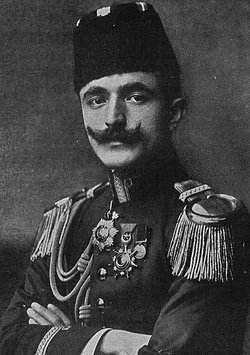
I couldn't help but take notice that the people were exceedingly Westernized. The men were all a blast from the Ottoman past--wearing skullcaps and bearing the thick, bushy mustache once associated with men like Enver Pasha. The women, many of whom were strikingly beautiful, wore makeup, blue jeans, and had no veils or headscarves.
In contrast to Egypt and Jordan, it was the women who sat out in front of the shops and stores. This was an interesting marketing strategy to say the least.
"There's a pita place," Dustin pointed out.
The radar in his stomach was finely tuned.
We crossed the road, looking every bit like a couple of amateur hikers on a tourist visa, and asked the round-cheeked, mustachioed owner for a couple Druze pitas. The man flashed a grin, minus a few teeth, and invited us to sit down as he oven-baked the pitas for us. His daughter, sitting out in front of the store next to us, walked over and fixed some olives and tea for us as the man's five year old granddaughter examined the two American aliens sitting in her grandfather's pita shop.
The tea was piping hot. The pita was as fantastic as Liran had advertised. I was admittedly a bit concerned about the intake of such spicy food prior to a camping excursion into the Golan outback, but at the time found myself nonetheless content.
We finished up, paid the man, and set out in search of the trail's starting marker. Dustin had put together a packet filled with maps and checkpoints for the trail on his thumb drive. Unfortunately, there had been no time to go to a print shop before the Pesach holidays. This meant that we were essentially running the Trail blind.
He had had the foresight to tear a map of the Golan out of the MASA handbook given to us during our first week in Israel.
Passing the two "shootout" between the two Druze boys and the invisible forces of evil, we marched throughout the town for the better part of half an hour in search of the trail's starting point. Despite speaking Hebrew to the residents there, none of them seemed to know what we were referring to. And hardly anyone spoke English.
Circling back toward the pita shop and past a massive statue commemorating either an event or people from long ago, we decided to move back down the mountain-side interstate in the general direction of the south. We were lost. And people either didn't understand us or didn't know where we needed to go.
Along the way, Dustin informed me that there was a location about half a kilometer east of Majdal Shams known as the "Shouting Hill." Since the city literally sat on the Israeli-Syrian border, the Druze in Majdal Shams had been separated from the Druze across the border following the Six Days' War. Thus, they developed a megaphone system on a hill just inside the Israeli border that they used to "shout" to their Druze neighbors in Syria to tell each other about the latest news.
This, apparently, was a weekly ritual that had been going on for quite some time. Imagining something straight out of Dr. Seuss' Horton Hears a Who!, I quietly placed the "Shouting Hill" on my future to-do list.
Furthermore, Dustin explained that most of the Druze in Majdal Shams were actually Syrian citizens. In an effort not to upset the delicate balance in their newly acquired territory following the Six Days' War, the Israeli government had agreed to allow the Druze to technically remain Syrian citizens. In return, the Druze more or less assimilated into the Israeli political system and helped the Israeli economy via their cherry and apple orchards.
And should there ever be a peace agreement between Syria and Israel and a return of Majdal Shams to Syrian territory, the Druze living in Majdal Shams would have the "political cover" to avoid reprisal attacks from their brethren or from other Syrians. They would be able to claim that they had always remained Syrian despite being in Israel. Apparently, the Druze in Majdal Shams are quite a bit wealthier than their coreligionists just a kilometer over in Syria. In turn, a degree of resentment has been born within the Druze community.
Israel, knowing that the territory might one day return to Syrian hands and knowing that retribution might face the Druze, did their part to help protect them should the day ever come.
Apparently the kid's Rotary Ambassador experiences had paid off with a wealth of uncommon knowledge. I was fairly impressed with the degree of detail that Dustin had concerning the Druze--a group we had rarely discussed thus far in our MAMEH program.
I glanced down at my watch to see that it was almost 2:00 p.m. As we continued to shuffle along the road and down the mountain, Dustin finally let out an exclamation of surprise.
"There it is!"
I turned to my left, shielding my eyes from the furious wind blowing in from the northwest to see a small stake with a white, green, and blue marker attached to it--the sign for the Golan Trail.
It's go time.
***
The forested slopes of the Trail were riddled with evergreens, jagged rocks, and flesh-ripping thorn bushes. We maneuvered at a steady pace, careful not to stumble and plummet down the foothills of Mount Hermon's base. We passed a broken water main, its contents dribbling down a dusty trail.
The first thirty minutes of the first day's hike gave way to a fantastic view of the Golani hills, valleys, and the distant mountain top castle of Nimrod Fortress. Built by the Assassins in the 13th Century under the auspices of Saladin's nephew Al-Aziz Uthman, Nimrod Fortress was a towering, sprawling edifice that harkened back through time to the age of the Crusader wars. The Jews named it Nimrod after the eponymous hermit resident that had once lived atop its summit.
The march down the forested slopes led to a hilly highway south of Majdal Shams. As we approached, Dustin and I saw what appeared to be 'tepees' at the summit on the horizon.
"Dude, are those...tepees?" I asked in utter disbelief.
"I...uh...I think so," Dustin said with a surprised guffaw.
We stopped for a moment and pulled out our cameras.
"What do you think?" I asked as I lined up the picture. "Slots on the right, Blackjack on the left?"
"You're going to hell, man."
***
I was sweating profusely by 3:30. The hour and a half march in the windy, sunny afternoon had taken us past several "pools" that the Druze had constructed as part of an innovative irrigation system, a former mosque-turned-youth center, gritty farms, and a pack of beleaguered Israeli hikers heading in the opposite direction.
"Ooh, check that out," Dustin said as he pointed toward the asphalt.
I looked down and nearly screamed as I leaped back. Dustin mixed a hearty laugh with a few well-placed jabs at my masculinity. A dead Palestinian viper lay directly beneath my feet. It had been run over by a car relatively recently. Knowing all too well that where there were babies, there was a mother nearby, I repressed a shudder and continued to move forward.
"Sheket (Quiet)," I replied. "If I see one of those damn things on this trail..."
"I used to grab 'em by the tail when I was a kid in Missouri and swing 'em around my head," Dustin announced proudly.
"Do you want a medal?"
Soon, we found ourselves moving through the town of Mas'ada, not to be confused with the ancient fortress of Masada found in the south of Israel in the Negev where Jewish rebels fought the Roman Empire in the infamous siege in 72-73 A.D. The sun was already brutally sapping our strength. By the time we came upon the Ram Pool (i.e. Lake Ram) on the eastern outskirts of Mas'ada, it was time for a water break.
Ahead, we had to prepare to maneuver through a thick forest. Dustin had wisely prepped his CamelBak to slip through his backpack and clip to his shoulder strap, allowing him access to water whenever he needed it. I was less creative and opted for accessing the two-liter Ein Gedi water bottle strapped to my left hip, feeling the CamelBak was more or less a resource of last resort when my water supply began to get low.
The mid-afternoon in the forest was an amazing testament to the diversity of Israel. The Trail wound its up through thick groves of pine and deciduous trees in a landscape that could have been ripped straight out of Chewacla back home. The cool mountainous wind from Mount Hermon, now easily eight to ten kilometers behind us, still cut its way through the forest canopy.
I scanned my left and right looking for any unseemly wild life that might be creeping about as Dustin temporarily took the lead.
Part of me flashed back to when I was a kid running around Piedmont or running through the woods behind Uncle Bill and Aunt Dorenda's house with Evan and Brad on a hot summer day. One particular instance came immediately to mind. I was eight and Brad was seven. We had been trudging through the woods near Rocky Brook road when I made out a cottonmouth sitting on a log. My phobia of all thing serpentine had taken hold and it had required the fearless persistence of Brad to get me to move out of the woods and back to the driveway.
You know, Drew, you sure can be a big baby, I thought as I moved to catch up with Dustin.
A rustle beneath my feet snapped my head down. Nothing. To both my relief and concern.
Way to prove yourself right on that one, champ.
***
By 4:30 p.m. we were moving back up hill and out of the wooded slopes beyond Mas'ada. Rugged Druze farmland, embedded on the rock-strewn soil on the jagged hillsides of the Golan, were on both our right and left. And the rocks were not mere pebbles--they were the head-sized boulders that smothered the topsoil.
We saw a young Druze boy in a yellow shirt hacking away at the soil, clearing the rocks away for a future harvest. How these farmers had managed to create vast, thriving orchards of cherry and apple trees I will never fully understand. It is nothing short of a miracle and speaks to their ingenuity and tenacity.
An Ottoman-looking man in a tractor sputtered down the road beside us. He waved as his mustache covered his smile. I figured that they were probably used to seeing hikers and travelers march through their farms during the Spring and Summer. All of them were friendly and called out to us with cries of Shalom or yom tov (good day).
Friendly and hard-working, I was nothing short of impressed with the Druze.
"How we doing on time?" Dustin asked with heavy breath. I glanced down at my watch. It was ten minutes after 5:00. We had been hiking for over three hours straight. The sun was starting to wind its way down as late afternoon settled upon the Golan Heights. The orange light basked the orchards in a heavenly glow. The distant thrum of a tractor was the only sound we could hear.
This is freedom. This is peace. Just God, man, and nature. This is how things should be.
"We'd better find a place to sleep soon," Dustin pressed.
"We'll camp at the next town."
Moving our way up a steep dirt road toward yet another hill top, we heard a car rumble up from behind us. A pair of middle-aged Israelis in an old van drove past us and waved.
"Wonder what they're doing?" I asked rhetorically.
We soon found out.
***
The top of the hill was more like the top of a mountain that we had gradually been ascending for the past hour. The grassy plateau at its peak was marked by a large military installation unlike anything I had ever seen before. Following the Trail, we moved up toward it and realized that it was an abandoned Israeli bunker and outpost.
A relic of the 1967 and 1973 wars.
Before we decided to explore it, we saw four hikers a little farther ahead standing near a wooden plank jutting out of the ground.
"I'm going to go ask them where we can get water and sleep," I announced.
"Fire away, chief."
The four Israelis, two guys and two girls, appeared to be taking a tea break as we approached.
"Shalom, eifo anahnu yacolim liknot mayim," I asked as I shook my now near-empty water bottle.
The Israeli nearest me, a curly-haired girl in her mid-twenties, smiled and responded in Hebrew so fast it caught me off guard.
"Uh..." I stammered.
"Americans, right?" the guy serving the tea stated more than asked.
"Yea," we answered in unison.
"We're almost done for the day so you can have this bottle," the girl said in perfect English.
"Thanks," I replied.
The other two Israelis, hiding behind their sunglasses, were thoroughly amused.
"Tea?" the young man asked. "It's mint tea. Very good."
"Sure. Sounds great. Thank you."
"Where are you two going?" the girl asked.
"We're hiking the Trail so we're looking for a place to camp tonight," Dustin replied.
"Okay, Buq'ata is the next city. Are you planning on staying there or on one of the kibbutz nearby?" the girl asked us as the man handed Dustin and I two cups of tea.
"We're not really sure," I answered.
"Where's your map?" she asked, a hint of incredulity creeping into her voice.
Dustin and I exchanged amused looks.
"Go ahead and show her the map, Dustin," I encouraged.
Dustin pulled the wrinkled, ripped MASA map out of his pocket and handed it to her. It was pg. 147 of the MASA guide to be exact. On it was a map that could have passed for being in a kid's geography book.
"This...this is your map?" the girl barked in disbelief.
A burst of laughter emanated from all of the Israelis. Dustin and I started laughing, too. Clearly they had been expecting a topographic map of the Golan Trail. What they received in return was a hand-sized piece of paper out of tourist guide.
"Where are you from?" the young man asked with a big grin.
"Missouri," Dustin said with a wide grin.
"Alabama," I quipped with a smile.
"I could tell from your accent," the girl said, her tone now softer than it had just been. "Al-uh-bay-ma!" she exclaimed with a laugh.
"I take it you've never hiked up here before," the young man inquired.
"Nah. We figured we'd just pack up and roll out," I explained. "Charge blindly ahead with absolutely no idea what we're doing or what we're getting ourselves into."
"Like good Americans, huh?" the young man responded in good cheer.
"Now you've got it," I replied.
The next few minutes the two Israelis who had been talking with us showed where we needed to go while the other two stood off to the side and adjusted their backpacks. Apparently, we needed to reach the other side of Buq'ata. With it already being nearly 5:30, it was going to be a race against time to make it there before sundown. We could make the town out on the horizon to our east.
"What are your names?" I asked.
"Gil," the man said.
"Leor," the girl replied.
"We're Dustin and Drew. Nice to meet you. Appreciate the help," I said.
"Well, Dustin and Drew from Al-uh-bay-ma, I'm sure we'll see you again," Leor said as they packed up in preparation for their hike ahead.
"With a map like that, I'm not so sure," Gil added.
***
The bunker at the top of the mountain was one of the most amazing sites I had witnessed. Dustin and I crawled through the complex like a couple of kids hitting their first playground. And in a way, it was a playground--a playground for grown-up military-obsessed boys.
The construct itself resembled something straight out of a HALO video game.
Mount Hermon and Majdal Shams towered in the distance as the sun crept toward its evening appointment with the West. And for a brief moment, I marveled at how far we had hiked in such a short amount of time and the immense majesty that was the Golan.
"We probably need to get a move on," Dustin said as we stood atop the bunker. "We've got a long day tomorrow."

Downtown Majdal Shams.

Shoot out!

The beginning of the Golan Trail.

Nimrod Fortress in the distance.

Camp...Navajo?

A sign outside of Mas'ada.

Keep up Jack Jack!

Seeing the forest for the trees...

Light in the forest.

Druze orchards with Mountain Hermon in the distance.

Sun setting on the Druze farmland.

Approaching the bunker atop the mount.

Burning back the sun.

Atop the bunker with Mount Hermon in the distance. The city high up on its slopes is Majdal Shams, where the day began. the city below it is Mas'ada.
It was just after 1:00 p.m. on Yom Rishon (Sunday). The bus from Kiryat Shmona had just deposited us off in the Druze village of Majdal Shams, a mountainous redoubt situated at the base of the highest point in all of Israel--Mount Hermon.
The streets were bustling with vehicle traffic down what appeared to be the town's only real thoroughfare. A strong wind billowed our packs as we hefted them up onto our shoulders.
Stefan had opted to stay behind for the multiple day trek along the Golan Trail, which meant the eighty-one mile trail was left for just Dustin and I to conquer. I had been briefly disappointed in our French-Irish compatriot, believing he had given in to his French roots and their propensity for surrender. However, he had generously allowed me to make use of his hiking backpack. This turned out to be of huge benefit by the end of the trail, as Stefan's backpack likely saved my own back and myself from an injurious, bedridden week.
"Where to, Jack Jack?" I fired back.
Two weeks prior in Hebrew class, Titus and I had settled on Dustin's new nickname: Jack Jack, the superhero baby from The Incredibles.
"Liran said they have amazing Druze pita here," Dustin answered as he tightened the straps on his pack.
"Dude, we just ate lunch in Kiryat Shmona," I said with a laugh.
"I know, but it's one of those things you'll be able to say you did," Dustin responded as we strolled along the town's storefront sidewalk.
Majdal Shams had been annexed from Syria by Israel following the Six Days' War in 1967. Today, it was the center of Druze life in Israel. Young girls and boys were running all throughout the town square and the storefront. One girl, no older than three, was hopping up and down in the backseat of a Ford F-150 sitting in front of a convenience store and occasionally blowing the horn while her mother, the store's shopkeeper, sat out front and shook her head in frustration.
Two boys, one around twelve and the other around eight, played with toy air-soft pistols, pretending to be in a shoot out against the invisible forces assailing their town.
This was the first time that I had ever encountered the Druze people. As a people, the Druze consider themselves a reformist movement within Islam--a breakaway sect seeking to unify theological disparities. However, the incorporation of decidedly non-Islamic practices makes the Druze very non-Muslim in many ways. In the eyes of Sunni and Shi'a, the Druze aren't even considered to be a part of Islam.
I couldn't help but take notice that the people were exceedingly Westernized. The men were all a blast from the Ottoman past--wearing skullcaps and bearing the thick, bushy mustache once associated with men like Enver Pasha. The women, many of whom were strikingly beautiful, wore makeup, blue jeans, and had no veils or headscarves.
In contrast to Egypt and Jordan, it was the women who sat out in front of the shops and stores. This was an interesting marketing strategy to say the least.
"There's a pita place," Dustin pointed out.
The radar in his stomach was finely tuned.
We crossed the road, looking every bit like a couple of amateur hikers on a tourist visa, and asked the round-cheeked, mustachioed owner for a couple Druze pitas. The man flashed a grin, minus a few teeth, and invited us to sit down as he oven-baked the pitas for us. His daughter, sitting out in front of the store next to us, walked over and fixed some olives and tea for us as the man's five year old granddaughter examined the two American aliens sitting in her grandfather's pita shop.
The tea was piping hot. The pita was as fantastic as Liran had advertised. I was admittedly a bit concerned about the intake of such spicy food prior to a camping excursion into the Golan outback, but at the time found myself nonetheless content.
We finished up, paid the man, and set out in search of the trail's starting marker. Dustin had put together a packet filled with maps and checkpoints for the trail on his thumb drive. Unfortunately, there had been no time to go to a print shop before the Pesach holidays. This meant that we were essentially running the Trail blind.
He had had the foresight to tear a map of the Golan out of the MASA handbook given to us during our first week in Israel.
Passing the two "shootout" between the two Druze boys and the invisible forces of evil, we marched throughout the town for the better part of half an hour in search of the trail's starting point. Despite speaking Hebrew to the residents there, none of them seemed to know what we were referring to. And hardly anyone spoke English.
Circling back toward the pita shop and past a massive statue commemorating either an event or people from long ago, we decided to move back down the mountain-side interstate in the general direction of the south. We were lost. And people either didn't understand us or didn't know where we needed to go.
Along the way, Dustin informed me that there was a location about half a kilometer east of Majdal Shams known as the "Shouting Hill." Since the city literally sat on the Israeli-Syrian border, the Druze in Majdal Shams had been separated from the Druze across the border following the Six Days' War. Thus, they developed a megaphone system on a hill just inside the Israeli border that they used to "shout" to their Druze neighbors in Syria to tell each other about the latest news.
This, apparently, was a weekly ritual that had been going on for quite some time. Imagining something straight out of Dr. Seuss' Horton Hears a Who!, I quietly placed the "Shouting Hill" on my future to-do list.
Furthermore, Dustin explained that most of the Druze in Majdal Shams were actually Syrian citizens. In an effort not to upset the delicate balance in their newly acquired territory following the Six Days' War, the Israeli government had agreed to allow the Druze to technically remain Syrian citizens. In return, the Druze more or less assimilated into the Israeli political system and helped the Israeli economy via their cherry and apple orchards.
And should there ever be a peace agreement between Syria and Israel and a return of Majdal Shams to Syrian territory, the Druze living in Majdal Shams would have the "political cover" to avoid reprisal attacks from their brethren or from other Syrians. They would be able to claim that they had always remained Syrian despite being in Israel. Apparently, the Druze in Majdal Shams are quite a bit wealthier than their coreligionists just a kilometer over in Syria. In turn, a degree of resentment has been born within the Druze community.
Israel, knowing that the territory might one day return to Syrian hands and knowing that retribution might face the Druze, did their part to help protect them should the day ever come.
Apparently the kid's Rotary Ambassador experiences had paid off with a wealth of uncommon knowledge. I was fairly impressed with the degree of detail that Dustin had concerning the Druze--a group we had rarely discussed thus far in our MAMEH program.
I glanced down at my watch to see that it was almost 2:00 p.m. As we continued to shuffle along the road and down the mountain, Dustin finally let out an exclamation of surprise.
"There it is!"
I turned to my left, shielding my eyes from the furious wind blowing in from the northwest to see a small stake with a white, green, and blue marker attached to it--the sign for the Golan Trail.
It's go time.
***
The forested slopes of the Trail were riddled with evergreens, jagged rocks, and flesh-ripping thorn bushes. We maneuvered at a steady pace, careful not to stumble and plummet down the foothills of Mount Hermon's base. We passed a broken water main, its contents dribbling down a dusty trail.
The first thirty minutes of the first day's hike gave way to a fantastic view of the Golani hills, valleys, and the distant mountain top castle of Nimrod Fortress. Built by the Assassins in the 13th Century under the auspices of Saladin's nephew Al-Aziz Uthman, Nimrod Fortress was a towering, sprawling edifice that harkened back through time to the age of the Crusader wars. The Jews named it Nimrod after the eponymous hermit resident that had once lived atop its summit.
The march down the forested slopes led to a hilly highway south of Majdal Shams. As we approached, Dustin and I saw what appeared to be 'tepees' at the summit on the horizon.
"Dude, are those...tepees?" I asked in utter disbelief.
"I...uh...I think so," Dustin said with a surprised guffaw.
We stopped for a moment and pulled out our cameras.
"What do you think?" I asked as I lined up the picture. "Slots on the right, Blackjack on the left?"
"You're going to hell, man."
***
I was sweating profusely by 3:30. The hour and a half march in the windy, sunny afternoon had taken us past several "pools" that the Druze had constructed as part of an innovative irrigation system, a former mosque-turned-youth center, gritty farms, and a pack of beleaguered Israeli hikers heading in the opposite direction.
"Ooh, check that out," Dustin said as he pointed toward the asphalt.
I looked down and nearly screamed as I leaped back. Dustin mixed a hearty laugh with a few well-placed jabs at my masculinity. A dead Palestinian viper lay directly beneath my feet. It had been run over by a car relatively recently. Knowing all too well that where there were babies, there was a mother nearby, I repressed a shudder and continued to move forward.
"Sheket (Quiet)," I replied. "If I see one of those damn things on this trail..."
"I used to grab 'em by the tail when I was a kid in Missouri and swing 'em around my head," Dustin announced proudly.
"Do you want a medal?"
Soon, we found ourselves moving through the town of Mas'ada, not to be confused with the ancient fortress of Masada found in the south of Israel in the Negev where Jewish rebels fought the Roman Empire in the infamous siege in 72-73 A.D. The sun was already brutally sapping our strength. By the time we came upon the Ram Pool (i.e. Lake Ram) on the eastern outskirts of Mas'ada, it was time for a water break.
Ahead, we had to prepare to maneuver through a thick forest. Dustin had wisely prepped his CamelBak to slip through his backpack and clip to his shoulder strap, allowing him access to water whenever he needed it. I was less creative and opted for accessing the two-liter Ein Gedi water bottle strapped to my left hip, feeling the CamelBak was more or less a resource of last resort when my water supply began to get low.
The mid-afternoon in the forest was an amazing testament to the diversity of Israel. The Trail wound its up through thick groves of pine and deciduous trees in a landscape that could have been ripped straight out of Chewacla back home. The cool mountainous wind from Mount Hermon, now easily eight to ten kilometers behind us, still cut its way through the forest canopy.
I scanned my left and right looking for any unseemly wild life that might be creeping about as Dustin temporarily took the lead.
Part of me flashed back to when I was a kid running around Piedmont or running through the woods behind Uncle Bill and Aunt Dorenda's house with Evan and Brad on a hot summer day. One particular instance came immediately to mind. I was eight and Brad was seven. We had been trudging through the woods near Rocky Brook road when I made out a cottonmouth sitting on a log. My phobia of all thing serpentine had taken hold and it had required the fearless persistence of Brad to get me to move out of the woods and back to the driveway.
You know, Drew, you sure can be a big baby, I thought as I moved to catch up with Dustin.
A rustle beneath my feet snapped my head down. Nothing. To both my relief and concern.
Way to prove yourself right on that one, champ.
***
By 4:30 p.m. we were moving back up hill and out of the wooded slopes beyond Mas'ada. Rugged Druze farmland, embedded on the rock-strewn soil on the jagged hillsides of the Golan, were on both our right and left. And the rocks were not mere pebbles--they were the head-sized boulders that smothered the topsoil.
We saw a young Druze boy in a yellow shirt hacking away at the soil, clearing the rocks away for a future harvest. How these farmers had managed to create vast, thriving orchards of cherry and apple trees I will never fully understand. It is nothing short of a miracle and speaks to their ingenuity and tenacity.
An Ottoman-looking man in a tractor sputtered down the road beside us. He waved as his mustache covered his smile. I figured that they were probably used to seeing hikers and travelers march through their farms during the Spring and Summer. All of them were friendly and called out to us with cries of Shalom or yom tov (good day).
Friendly and hard-working, I was nothing short of impressed with the Druze.
"How we doing on time?" Dustin asked with heavy breath. I glanced down at my watch. It was ten minutes after 5:00. We had been hiking for over three hours straight. The sun was starting to wind its way down as late afternoon settled upon the Golan Heights. The orange light basked the orchards in a heavenly glow. The distant thrum of a tractor was the only sound we could hear.
This is freedom. This is peace. Just God, man, and nature. This is how things should be.
"We'd better find a place to sleep soon," Dustin pressed.
"We'll camp at the next town."
Moving our way up a steep dirt road toward yet another hill top, we heard a car rumble up from behind us. A pair of middle-aged Israelis in an old van drove past us and waved.
"Wonder what they're doing?" I asked rhetorically.
We soon found out.
***
The top of the hill was more like the top of a mountain that we had gradually been ascending for the past hour. The grassy plateau at its peak was marked by a large military installation unlike anything I had ever seen before. Following the Trail, we moved up toward it and realized that it was an abandoned Israeli bunker and outpost.
A relic of the 1967 and 1973 wars.
Before we decided to explore it, we saw four hikers a little farther ahead standing near a wooden plank jutting out of the ground.
"I'm going to go ask them where we can get water and sleep," I announced.
"Fire away, chief."
The four Israelis, two guys and two girls, appeared to be taking a tea break as we approached.
"Shalom, eifo anahnu yacolim liknot mayim," I asked as I shook my now near-empty water bottle.
The Israeli nearest me, a curly-haired girl in her mid-twenties, smiled and responded in Hebrew so fast it caught me off guard.
"Uh..." I stammered.
"Americans, right?" the guy serving the tea stated more than asked.
"Yea," we answered in unison.
"We're almost done for the day so you can have this bottle," the girl said in perfect English.
"Thanks," I replied.
The other two Israelis, hiding behind their sunglasses, were thoroughly amused.
"Tea?" the young man asked. "It's mint tea. Very good."
"Sure. Sounds great. Thank you."
"Where are you two going?" the girl asked.
"We're hiking the Trail so we're looking for a place to camp tonight," Dustin replied.
"Okay, Buq'ata is the next city. Are you planning on staying there or on one of the kibbutz nearby?" the girl asked us as the man handed Dustin and I two cups of tea.
"We're not really sure," I answered.
"Where's your map?" she asked, a hint of incredulity creeping into her voice.
Dustin and I exchanged amused looks.
"Go ahead and show her the map, Dustin," I encouraged.
Dustin pulled the wrinkled, ripped MASA map out of his pocket and handed it to her. It was pg. 147 of the MASA guide to be exact. On it was a map that could have passed for being in a kid's geography book.
"This...this is your map?" the girl barked in disbelief.
A burst of laughter emanated from all of the Israelis. Dustin and I started laughing, too. Clearly they had been expecting a topographic map of the Golan Trail. What they received in return was a hand-sized piece of paper out of tourist guide.
"Where are you from?" the young man asked with a big grin.
"Missouri," Dustin said with a wide grin.
"Alabama," I quipped with a smile.
"I could tell from your accent," the girl said, her tone now softer than it had just been. "Al-uh-bay-ma!" she exclaimed with a laugh.
"I take it you've never hiked up here before," the young man inquired.
"Nah. We figured we'd just pack up and roll out," I explained. "Charge blindly ahead with absolutely no idea what we're doing or what we're getting ourselves into."
"Like good Americans, huh?" the young man responded in good cheer.
"Now you've got it," I replied.
The next few minutes the two Israelis who had been talking with us showed where we needed to go while the other two stood off to the side and adjusted their backpacks. Apparently, we needed to reach the other side of Buq'ata. With it already being nearly 5:30, it was going to be a race against time to make it there before sundown. We could make the town out on the horizon to our east.
"What are your names?" I asked.
"Gil," the man said.
"Leor," the girl replied.
"We're Dustin and Drew. Nice to meet you. Appreciate the help," I said.
"Well, Dustin and Drew from Al-uh-bay-ma, I'm sure we'll see you again," Leor said as they packed up in preparation for their hike ahead.
"With a map like that, I'm not so sure," Gil added.
***
The bunker at the top of the mountain was one of the most amazing sites I had witnessed. Dustin and I crawled through the complex like a couple of kids hitting their first playground. And in a way, it was a playground--a playground for grown-up military-obsessed boys.
The construct itself resembled something straight out of a HALO video game.
Mount Hermon and Majdal Shams towered in the distance as the sun crept toward its evening appointment with the West. And for a brief moment, I marveled at how far we had hiked in such a short amount of time and the immense majesty that was the Golan.
"We probably need to get a move on," Dustin said as we stood atop the bunker. "We've got a long day tomorrow."

Downtown Majdal Shams.

Shoot out!

The beginning of the Golan Trail.

Nimrod Fortress in the distance.

Camp...Navajo?

A sign outside of Mas'ada.

Keep up Jack Jack!

Seeing the forest for the trees...

Light in the forest.

Druze orchards with Mountain Hermon in the distance.

Sun setting on the Druze farmland.

Approaching the bunker atop the mount.

Burning back the sun.

Atop the bunker with Mount Hermon in the distance. The city high up on its slopes is Majdal Shams, where the day began. the city below it is Mas'ada.
Wednesday, April 7, 2010
Pesach Post Promise
Alliterative title aside, I want to provide a brief update. I just returned from an awe-inspiring three-day hiking and camping excursion to the Golan Heights. It was a remarkable journey that started in Majdal Shams and ended beyond the kibbutz of Aloni HaBashan. In total, the distance covered was about half of the eighty-one mile Golan Trail.
A huge update will be forthcoming in the next few days filled with pictures and good stories.
I hope everyone had a wonderful Easter. I spent my Easter Sunday marching through Druze farms, standing atop an abandoned Israeli bunker, and sleeping beneath the ramshackle remains of a tent in a field crawling with lizards, bugs, and snakes.
And oh yea, Dustin was along for the ride, too.
More to come.
A huge update will be forthcoming in the next few days filled with pictures and good stories.
I hope everyone had a wonderful Easter. I spent my Easter Sunday marching through Druze farms, standing atop an abandoned Israeli bunker, and sleeping beneath the ramshackle remains of a tent in a field crawling with lizards, bugs, and snakes.
And oh yea, Dustin was along for the ride, too.
More to come.
Monday, March 29, 2010
Out of Egypt
Today is the first day of Pesach (Passover), which is a celebration of the Israelites' exodus out of Egypt (slavery) and toward the Promised Land (freedom).
Since Pesach is regarded as one of the most significant Jewish traditions, last Thursday I asked our Hebrew teacher, Varda, how long Pesach typically lasts. Her answer was interesting. She remarked that it lasted for as long as it needed to. She smiled as I mulled this information about in my head.
Initially, this struck me as a sign of sheer brilliance--a holiday that ended whenever one desired! As a byproduct of the United States, I couldn't help but wonder how we ever let that idea slip past!
I mean we're the leisurely-minded entrepreneurs who gave the world the LA-Z-Boy, clap-on lighting, and the greatest lazy man's invention of all time!
Americans come out of the womb wondering how we can make even that process easier. How in the name of push-button 4-wheel drive did we not jump aboard that bandwagon?
This mystery eluded me for the better part of four days.
However, I should note that the most pressing concern for myself is the inconvenient truth (an actual truth, Al) that all of the stores are fresh out of bread. This means that it's all matzah all the time. And matzah, for those who may not know, is unleavened, hardened bread. It's like eating a flat and tough Saltine cracker without all the flavor of a typical Saltine cracker.
What's that you say? Saltine crackers don't have any flavor to begin with? Well, that's a fine point you make. What's that? I'm having a mock conversation with myself and need to cease immediately?
Much appreciated. Moving right along, then.
Needless to say, matzah is not very appetizing. But that's essentially the point. The matzah represents a particular dynamic within the story told in Exodus. The Israelites had to flee Egypt in such a hurry that there was literally no time for the dough to rise in their bread. Hence the creation and significance of matzah.
As is Jewish custom, families will gather together and celebrate today for a seder dinner. Orthodox, Conservative, Reform, or secular, Passover is regarded as an essential element of Jewish identity.
And in Israel, the holiday carries an even greater significance. Following the destruction of the Second Temple in 70 A.D. by the Roman Caesar Titus, nearly two thousand years of Diaspora displaced the Jewish people to the four corners of the earth. Such a fate should have surely resulted in the death knell of the Jews and Jewish tradition.
But it was not to be.
The story of Judaism's survival through the ages is one of the most remarkable tales in mankind's history and perhaps the topic for a future blog post. What's important is that the Pesach tradition survived during those two thousand years. And in 1948, a new reality soon set in for God's Chosen.
The restoration of the state of Israel drew her people back home and with them, traditions that had grown and been internalized in ways likely unimaginable for the Jews of millennia past. The restoration of Israel, like the Exodus out of Egypt, brought the Jews back to the Promised Land--out of bondage and servitude to others and into freedom--freedom to once again have a sovereign say over their own destiny.
So while Pesach is indeed a celebration and acknowledgment of God's deliverance from Egypt, it is also an acknowledgment, be it direct or implicit or grudgingly, by Israelis of God's promises kept through the generations.
And I realize now what Varda meant when she said that "it lasted as long as it needed to." Passover is not a single day or week or event that is commemorated, stowed away, and brought back out of the box the following year. Passover is about God's promise. It's about freedom.
And that's not something that merely lasts for a season. It's something that lasts for eternity.
!פסח שמח
Since Pesach is regarded as one of the most significant Jewish traditions, last Thursday I asked our Hebrew teacher, Varda, how long Pesach typically lasts. Her answer was interesting. She remarked that it lasted for as long as it needed to. She smiled as I mulled this information about in my head.
Initially, this struck me as a sign of sheer brilliance--a holiday that ended whenever one desired! As a byproduct of the United States, I couldn't help but wonder how we ever let that idea slip past!
I mean we're the leisurely-minded entrepreneurs who gave the world the LA-Z-Boy, clap-on lighting, and the greatest lazy man's invention of all time!
Americans come out of the womb wondering how we can make even that process easier. How in the name of push-button 4-wheel drive did we not jump aboard that bandwagon?
This mystery eluded me for the better part of four days.
However, I should note that the most pressing concern for myself is the inconvenient truth (an actual truth, Al) that all of the stores are fresh out of bread. This means that it's all matzah all the time. And matzah, for those who may not know, is unleavened, hardened bread. It's like eating a flat and tough Saltine cracker without all the flavor of a typical Saltine cracker.
What's that you say? Saltine crackers don't have any flavor to begin with? Well, that's a fine point you make. What's that? I'm having a mock conversation with myself and need to cease immediately?
Much appreciated. Moving right along, then.
Needless to say, matzah is not very appetizing. But that's essentially the point. The matzah represents a particular dynamic within the story told in Exodus. The Israelites had to flee Egypt in such a hurry that there was literally no time for the dough to rise in their bread. Hence the creation and significance of matzah.
As is Jewish custom, families will gather together and celebrate today for a seder dinner. Orthodox, Conservative, Reform, or secular, Passover is regarded as an essential element of Jewish identity.
And in Israel, the holiday carries an even greater significance. Following the destruction of the Second Temple in 70 A.D. by the Roman Caesar Titus, nearly two thousand years of Diaspora displaced the Jewish people to the four corners of the earth. Such a fate should have surely resulted in the death knell of the Jews and Jewish tradition.
But it was not to be.
The story of Judaism's survival through the ages is one of the most remarkable tales in mankind's history and perhaps the topic for a future blog post. What's important is that the Pesach tradition survived during those two thousand years. And in 1948, a new reality soon set in for God's Chosen.
The restoration of the state of Israel drew her people back home and with them, traditions that had grown and been internalized in ways likely unimaginable for the Jews of millennia past. The restoration of Israel, like the Exodus out of Egypt, brought the Jews back to the Promised Land--out of bondage and servitude to others and into freedom--freedom to once again have a sovereign say over their own destiny.
So while Pesach is indeed a celebration and acknowledgment of God's deliverance from Egypt, it is also an acknowledgment, be it direct or implicit or grudgingly, by Israelis of God's promises kept through the generations.
And I realize now what Varda meant when she said that "it lasted as long as it needed to." Passover is not a single day or week or event that is commemorated, stowed away, and brought back out of the box the following year. Passover is about God's promise. It's about freedom.
And that's not something that merely lasts for a season. It's something that lasts for eternity.
!פסח שמח
Thursday, March 25, 2010
Beseiged
I apologize for the lack of frequent updates. The workload for our program is quite heavy and I've found relatively little time to give Fried Camel the attention it deserves.
Fortunately, the Pesach (Passover) break has begun today and there will be time to update over the course of the next two and a half weeks. Additionally, there are trips to the Golan Heights, Masada, and the Dead Sea planned, which could and should provide for interesting posts--not to mention Pesach itself.
That stated, I thought I would follow up on the thread from last week regarding the political situation here in Israel. If the unfolding situation between the U.S. and Israel could be described as a brush fire, I would not describe the brush fire as intense in its "heat" as it was last week, but I would certainly describe it as having spread. And there is little sign of it tapering off.
As per last week's update, the announcement of new housing units in the Ramat Shlomo neighborhood of East Jerusalem by the Israeli Interior Minister provided the perfect opportunity for the Obama Administration to trap Prime Minister Netanyahu. The move turned a simple boneheaded mistake on the Israelis' part into a desirable crisis on behalf of the Obama Administration.
And we all know that our leaders don't believe in letting "a good crisis go to waste."
Recent developments and their implications change as rapidly as they appear, which makes for difficulty when attempting to analyze. However, analysis is necessary as the implications are far reaching.
The divide within Israeli society over the "loners" and "groaners" hasn't shown any tangible signs of exacerbating since I last updated the blog. Most Israelis seem to be locked into wait-and-see mode. The intentions of the Obama Administration are being weighed against the actions of the Netanyahu-led coalition.
What will the United States tolerate? What does the U.S. expect of Israel? What will Bibi Netanyahu's decisions reflect? Will the United States interfere in the Israeli government as they did under President Clinton when American Democratic strategists and Democratic donors all but ousted Netanyahu in his first tenure as Prime Minister? What does this all mean with regard to the Iranian threat?
These are some of the things Israelis are thinking about--things that they are nervously anticipating. Fresh developments have put Israel under even further scrutiny.
During a speech to AIPAC (American-Israeli Political Action Conference) two days ago, Netanyahu announced quite bluntly that "Jerusalem is not a settlement. It is our capital." This was a clear slap at the Obama Administration. He received enthusiastic applause for such defiance in the face of a none-too-friendly U.S. President. This is not a surprise considering the equally enthusiastic pro-Israel crowd.
What is somewhat surprising is how bold and savvy this move was. Netanyahu has essentially decided to circumvent the U.S. government and instead make a direct appeal to the sympathy of the American people, who are overwhelmingly in support of Israel. The calculation seems to be that domestic support for Obama is not as strong as it once was and that the American people can bring pressure to bear against their government to support and defend the American-Israel alliance.
Given Netanyahu's American education and his understanding of American society, this could prove to be an interesting tactic that in the long run gives Israel an advantage.
Reports are circulating that the private meeting between Netanyahu and Obama did not go well at all. Here in Israel, the media seems to be portraying the entire conflagration rather tepidly. Neither left or right want to inflame tensions any worse. Both sides of the ideological spectrum understand the danger involved with undermining Netanyahu and assailing Obama. Israel needs America if Iran is to be stopped.
This media approach could certainly change as the entire situation is fluid. And news in Britain and Jordan reflects this fluidity. In what I believe is a bid to energize their domestic voter base prior to the coming elections, the Labor government has expelled Israeli personnel from the Israeli embassy in Great Britain.
Information gleaned following the assassination of Mahmoud al-Mabhouh, a Hamas operative responsible for transferring weapons from Iran to Gaza, points to a highly elaborate Mossad effort to disrupt the Iranian regime and their terror proxies. According to the British government, Israeli intelligence agents impersonated British citizens using false passports to pull off the high-profile assassination in Dubai.
And yesterday, the British government used its strongest language yet against Israel, taking even stronger action to expel Israeli embassy staff.
Now Israel is withering a highly publicized confrontation with its two closest and most powerful allies--despite the shared common enemy of the Islamic Republic of Iran. And today, the U.S. announced that it would seek weaker than expected sanctions against Iran over its nuclear weapons program.
Even the moderate regime of Jordan, an Arab nation formally at peace with Israel and a strong U.S. ally in this region, announced courtesy of King Abdullah II that "Israel must decide if it wants conflict or peace."
As I've stated before, words mean things in this region. And the fact that Jordan is entering in the fray suggests that King Abdullah II senses a power shift in the world and the Middle East. He knows he must tread carefully if Iran or Turkey's influence continues to grow in the face of weakened and softer U.S. leadership.
Neither Jordan nor Egypt want to face the wrath of their coreligionists for signing peace treaties with the Zionist state. And this wrath is becoming a greater and greater possibility as the threat against Israel's very existence mounts and the decisiveness of the West to act against Iran continues to wane.
Netanyahu returns to Israel from the U.S. without having secured assurances from the American government, with burgeoning British hostility, growing uncertainty from Islamic moderates, and with renewed confidence from radical Islamists. This recipe is not one for peace.
The words from the prophet Isaiah grow louder and louder every passing day:
The hour to once again stand with Israel and our Jewish brethren draws near.
3/26 Update: The Times of London is reporting that Prime Minister Netanyahu was humiliated by President Obama during a meeting in the Oval Office a couple days ago.
Netanyahu unveiled a flow chart explaining how the Interior Ministry and housing pronouncements work and explained to Obama how there was absolutely no way that he could have known that such an announcement was coming during Vice-President Biden's visit.
Obama, none too pleased that Bibi was not addressing U.S. demands, then apparently stood up, told Netanyahu that he had a private dinner to attend, and to "let me know if there is anything new." Such a snub is unprecedented. The only thing that even is comparable is Reagan walking away from the negotiating table at Reykjavik when he was dealing with Gorbachev and the Soviets.
The difference between the Soviet Union and Israel should be quite apparent to anyone reading this.
Both Netanyahu and Defense Minister Ehud Barak then went to the Roosevelt Room to regroup, but eventually opted to leave the White House entirely because they no longer trusted the Americans not to listen in on their discussion or phone calls.
Thus they returned to the Israeli embassy in D.C. and eventually flew back here to Tel Aviv.
Fortunately, the Pesach (Passover) break has begun today and there will be time to update over the course of the next two and a half weeks. Additionally, there are trips to the Golan Heights, Masada, and the Dead Sea planned, which could and should provide for interesting posts--not to mention Pesach itself.
That stated, I thought I would follow up on the thread from last week regarding the political situation here in Israel. If the unfolding situation between the U.S. and Israel could be described as a brush fire, I would not describe the brush fire as intense in its "heat" as it was last week, but I would certainly describe it as having spread. And there is little sign of it tapering off.
As per last week's update, the announcement of new housing units in the Ramat Shlomo neighborhood of East Jerusalem by the Israeli Interior Minister provided the perfect opportunity for the Obama Administration to trap Prime Minister Netanyahu. The move turned a simple boneheaded mistake on the Israelis' part into a desirable crisis on behalf of the Obama Administration.
And we all know that our leaders don't believe in letting "a good crisis go to waste."
Recent developments and their implications change as rapidly as they appear, which makes for difficulty when attempting to analyze. However, analysis is necessary as the implications are far reaching.
The divide within Israeli society over the "loners" and "groaners" hasn't shown any tangible signs of exacerbating since I last updated the blog. Most Israelis seem to be locked into wait-and-see mode. The intentions of the Obama Administration are being weighed against the actions of the Netanyahu-led coalition.
What will the United States tolerate? What does the U.S. expect of Israel? What will Bibi Netanyahu's decisions reflect? Will the United States interfere in the Israeli government as they did under President Clinton when American Democratic strategists and Democratic donors all but ousted Netanyahu in his first tenure as Prime Minister? What does this all mean with regard to the Iranian threat?
These are some of the things Israelis are thinking about--things that they are nervously anticipating. Fresh developments have put Israel under even further scrutiny.
During a speech to AIPAC (American-Israeli Political Action Conference) two days ago, Netanyahu announced quite bluntly that "Jerusalem is not a settlement. It is our capital." This was a clear slap at the Obama Administration. He received enthusiastic applause for such defiance in the face of a none-too-friendly U.S. President. This is not a surprise considering the equally enthusiastic pro-Israel crowd.
What is somewhat surprising is how bold and savvy this move was. Netanyahu has essentially decided to circumvent the U.S. government and instead make a direct appeal to the sympathy of the American people, who are overwhelmingly in support of Israel. The calculation seems to be that domestic support for Obama is not as strong as it once was and that the American people can bring pressure to bear against their government to support and defend the American-Israel alliance.
Given Netanyahu's American education and his understanding of American society, this could prove to be an interesting tactic that in the long run gives Israel an advantage.
Reports are circulating that the private meeting between Netanyahu and Obama did not go well at all. Here in Israel, the media seems to be portraying the entire conflagration rather tepidly. Neither left or right want to inflame tensions any worse. Both sides of the ideological spectrum understand the danger involved with undermining Netanyahu and assailing Obama. Israel needs America if Iran is to be stopped.
This media approach could certainly change as the entire situation is fluid. And news in Britain and Jordan reflects this fluidity. In what I believe is a bid to energize their domestic voter base prior to the coming elections, the Labor government has expelled Israeli personnel from the Israeli embassy in Great Britain.
Information gleaned following the assassination of Mahmoud al-Mabhouh, a Hamas operative responsible for transferring weapons from Iran to Gaza, points to a highly elaborate Mossad effort to disrupt the Iranian regime and their terror proxies. According to the British government, Israeli intelligence agents impersonated British citizens using false passports to pull off the high-profile assassination in Dubai.
And yesterday, the British government used its strongest language yet against Israel, taking even stronger action to expel Israeli embassy staff.
Now Israel is withering a highly publicized confrontation with its two closest and most powerful allies--despite the shared common enemy of the Islamic Republic of Iran. And today, the U.S. announced that it would seek weaker than expected sanctions against Iran over its nuclear weapons program.
Even the moderate regime of Jordan, an Arab nation formally at peace with Israel and a strong U.S. ally in this region, announced courtesy of King Abdullah II that "Israel must decide if it wants conflict or peace."
As I've stated before, words mean things in this region. And the fact that Jordan is entering in the fray suggests that King Abdullah II senses a power shift in the world and the Middle East. He knows he must tread carefully if Iran or Turkey's influence continues to grow in the face of weakened and softer U.S. leadership.
Neither Jordan nor Egypt want to face the wrath of their coreligionists for signing peace treaties with the Zionist state. And this wrath is becoming a greater and greater possibility as the threat against Israel's very existence mounts and the decisiveness of the West to act against Iran continues to wane.
Netanyahu returns to Israel from the U.S. without having secured assurances from the American government, with burgeoning British hostility, growing uncertainty from Islamic moderates, and with renewed confidence from radical Islamists. This recipe is not one for peace.
The words from the prophet Isaiah grow louder and louder every passing day:
"But you, O Israel, my servant, Jacob, whom I have chosen, you descendants of Abraham my friend, I took you from the ends of the earth, from its farthest corners I called you. I said, 'You are my servant'; I have chosen you and have not rejected you.
So do not fear, for I am with you; do not be dismayed, for I am your God. I will strengthen you and help you; I will uphold you with my righteous right hand. All who rage against you will surely be ashamed and disgraced; those who oppose you will be as nothing and perish.
Though you search for your enemies, you will not find them. Those who wage war against you will be as nothing at all. For I am the Lord, your God, who takes hold of your right hand and says to you, Do not fear; I will help you."
-Isaiah 41:8-13
The hour to once again stand with Israel and our Jewish brethren draws near.
3/26 Update: The Times of London is reporting that Prime Minister Netanyahu was humiliated by President Obama during a meeting in the Oval Office a couple days ago.
Netanyahu unveiled a flow chart explaining how the Interior Ministry and housing pronouncements work and explained to Obama how there was absolutely no way that he could have known that such an announcement was coming during Vice-President Biden's visit.
Obama, none too pleased that Bibi was not addressing U.S. demands, then apparently stood up, told Netanyahu that he had a private dinner to attend, and to "let me know if there is anything new." Such a snub is unprecedented. The only thing that even is comparable is Reagan walking away from the negotiating table at Reykjavik when he was dealing with Gorbachev and the Soviets.
The difference between the Soviet Union and Israel should be quite apparent to anyone reading this.
Both Netanyahu and Defense Minister Ehud Barak then went to the Roosevelt Room to regroup, but eventually opted to leave the White House entirely because they no longer trusted the Americans not to listen in on their discussion or phone calls.
Thus they returned to the Israeli embassy in D.C. and eventually flew back here to Tel Aviv.
Monday, March 15, 2010
On Unsettling Ground
A crisis is brewing here in Israel. All signs are pointing toward a potentially catastrophic rift in U.S.-Israeli relations.
The visit last week by Vice President Joe Biden was deemed by many Israeli analysts to have gone from tense upon the outset to outright disastrous by the end. The announcement of new construction of settlements in East Jerusalem in what is being called the "Ramat Shlomo" scandal has brought the longstanding relationship into question.
First, I believe some background details are needed to properly convey what has transpired and brought us to this breaking point.
When Vice President Biden arrived in Israel last week, his reception was considered to be cool at best. After having already visited Washington multiple times to meet personally with President Obama, Netanyahu's neutral reception of Biden should be of no great surprise. However, it is believed that elements within the Israeli government considered the Obama Administration's decision to send Joe Biden instead of Obama himself was a "slap in the face" to Israel.
Biden was the first official visitor from the Obama Administration. With the looming threat of Iran, the rearming of Hezbollah, the continuing threat posed by Hamas and Syria, and a stalled Israeli-Palestinian peace process, it is understandable in my view why Israelis would view the arrival of the Vice President less enthusiastically than the President.
When Vice President Biden was visiting with Palestinian officials in the West Bank, a minister aligned with the Netanyahu-led government announced the construction of 1,600 new housing units in the Ramat Shlomo neighborhood of East Jerusalem--a clear "infraction" by the Israelis across what is called the 'Green Line' denoting Palestinian and Israeli territory.
The timing of this announcement was indeed purposeful in embarrassing the Vice President and the United States and should be scorned appropriately. However, it is important to consider that the announcement was done by a member of Shas--the ultra right party that is a part of Netanyahu's coalition government.
What is being missed in the uproar and occasionally petulant turmoil that has ensued is the fact that domestic politics within Israel is at play here. Shas wants to position itself more favorably with the settlers who generally view Netanyahu's Likud party as the strongest party representing their interests.
The announcement by Interior Minister Eli Yishai (Shas) was nothing less than political sabotage against Prime Minister Benjamin Netanyahu. This is patently obvious.
Following the announcement, Biden, clearly infuriated, showed up to his planned dinner with Netanyahu nearly two hours late. Netanyahu responded by assuring both Biden and the U.S. that the announcement was one of "stupidity not malice."
Considering the implications of such a timed announcement, the pressing issues facing Netanyahu with regard to the existential threat posed by Iran, and the ensuing fallout, I think it's safe to take him for his word.
Secretary of State Hillary Clinton reportedly went on a tirade over the phone for nearly forty-five minutes when speaking with Netanyahu. And just today, Obama's chief political advisor, David Axelrod, called Israel's actions an "insult" and an "affront."
Michael Oren, Israeli's ambassador to the U.S., is suggesting that the U.S.-Israeli relationship is In A Crisis of Historic Proportions.
So what does all of this mean?
First, Netanyahu is now in a demonstrably unenviable position. He is now being forced to choose between his longstanding political supporters at home who support a unified Jerusalem under Israeli control or the integrity of the longstanding, strategic alliance with the United States.
This means that the support he has enjoyed since taking office last year is in jeopardy of melting away. The fact of the matter remains that most Israelis would rather see Netanyahu lose power than Israel lose its most important and powerful friend--particularly at a time when Israel's very existence remains threatened.
Netanyahu is very aware of this situation. And from what I can gather from Israeli media and Israelis themselves, is that the doubts about the intentions of the Obama Administration are metastasizing into two sharply divided camps: loners and groaners.
Israelis who were suspicious all along of America's new government are now rallying around the "go it alone" mentality. They believed the special friendship with America died when Obama was elected and this past week's developments are merely confirmation of that. Subsequently, Israel is now on its own regardless of whatever platitudes Biden paid in lip-service during his speech at Tel Aviv University.
The second group, which I've dubbed the "groaners," are those Israelis who likely never supported Netanyahu and were never distrustful of Obama. They are the ones who are self-flagellating themselves, lambasting Netanyahu for jeopardizing relations with the U.S., and lamenting the fallout as a sign that Israel must capitulate to all or many international demands in order to keep the United States on her side.
The question remains which of these two groups are the most dominant. And it should also be noted that Israel has complied with all of these demands in the so-called "peace process." They have withdrawn from southern Lebanon and Gaza and have received nothing but death and destruction in return. They have lost over 1,000 of their own citizens to radical Islamists in the West Bank and Gaza. And they have, under Netanyahu, frozen construction of all settlement projects outside Jerusalem for ten months in order to jump-start the stalled "peace talks."
Israel has been making real sacrifices. Sacrifices that often go ignored by people in the U.S. and the moral-equivocating, chattering heads in Europe.
And finally, there is the most important factor following this unsettling turn of events. And that is Iran and by rote its proxies, Hamas and Hezbollah. Make no mistake that they are watching these events with great interest and great delight.
Words mean things in this region. Words are literally matters of life and death. And if there is a perception of separation between the U.S. and Israel, the radical Islamists will pounce. Already, the Obama Administration's abysmal and lackluster effort in reigning in Iran's nuclear weapons program has empowered all of these entities--entities which are undeniably on the rise.
Obama's willingness to "end the debate" and proclamations that it is time to "stop the talking" with regard to domestic policies like Health care reform, Israeli-Palestinian issues, and a host of other initiatives has not carried over to dealing with Iran and its terror masters. In fact, the President of the United States seems all too keen to talk with Iran right up until the point that the nuclear weapons are on the launching pads.
This stark and utterly unfathomable contrast in these actions has not been lost on either the Israelis or on the Iranians. The foreboding tremors rippling from these events suggests a harbinger of coming events.
And the prospect for war, in my opinion, is now greater than ever.
3/16 Updates:
Yehuda Avner, Former Adviser to late Prime Minister Rabin: "Obama repeating 1975 Mistakes; U.S. Painting Israel into a Corner"
Sen. Joe Lieberman and Sen. John McCain: "Quit Attacking America's Friends"
Prime Minister Benjamin Netanyahu: "Not Backing Down; Jerusalem Will Be A United City"
Khatem Abd al-Kader, Fatah Cleric: "Rallying Cry to Muslims to Save Al-Aqsa; Jews Trying to Rebuild Temple"
Hamas: "Day of Rage Forthcoming"
The visit last week by Vice President Joe Biden was deemed by many Israeli analysts to have gone from tense upon the outset to outright disastrous by the end. The announcement of new construction of settlements in East Jerusalem in what is being called the "Ramat Shlomo" scandal has brought the longstanding relationship into question.
First, I believe some background details are needed to properly convey what has transpired and brought us to this breaking point.
When Vice President Biden arrived in Israel last week, his reception was considered to be cool at best. After having already visited Washington multiple times to meet personally with President Obama, Netanyahu's neutral reception of Biden should be of no great surprise. However, it is believed that elements within the Israeli government considered the Obama Administration's decision to send Joe Biden instead of Obama himself was a "slap in the face" to Israel.
Biden was the first official visitor from the Obama Administration. With the looming threat of Iran, the rearming of Hezbollah, the continuing threat posed by Hamas and Syria, and a stalled Israeli-Palestinian peace process, it is understandable in my view why Israelis would view the arrival of the Vice President less enthusiastically than the President.
When Vice President Biden was visiting with Palestinian officials in the West Bank, a minister aligned with the Netanyahu-led government announced the construction of 1,600 new housing units in the Ramat Shlomo neighborhood of East Jerusalem--a clear "infraction" by the Israelis across what is called the 'Green Line' denoting Palestinian and Israeli territory.
The timing of this announcement was indeed purposeful in embarrassing the Vice President and the United States and should be scorned appropriately. However, it is important to consider that the announcement was done by a member of Shas--the ultra right party that is a part of Netanyahu's coalition government.
What is being missed in the uproar and occasionally petulant turmoil that has ensued is the fact that domestic politics within Israel is at play here. Shas wants to position itself more favorably with the settlers who generally view Netanyahu's Likud party as the strongest party representing their interests.
The announcement by Interior Minister Eli Yishai (Shas) was nothing less than political sabotage against Prime Minister Benjamin Netanyahu. This is patently obvious.
Following the announcement, Biden, clearly infuriated, showed up to his planned dinner with Netanyahu nearly two hours late. Netanyahu responded by assuring both Biden and the U.S. that the announcement was one of "stupidity not malice."
Considering the implications of such a timed announcement, the pressing issues facing Netanyahu with regard to the existential threat posed by Iran, and the ensuing fallout, I think it's safe to take him for his word.
Secretary of State Hillary Clinton reportedly went on a tirade over the phone for nearly forty-five minutes when speaking with Netanyahu. And just today, Obama's chief political advisor, David Axelrod, called Israel's actions an "insult" and an "affront."
Michael Oren, Israeli's ambassador to the U.S., is suggesting that the U.S.-Israeli relationship is In A Crisis of Historic Proportions.
So what does all of this mean?
First, Netanyahu is now in a demonstrably unenviable position. He is now being forced to choose between his longstanding political supporters at home who support a unified Jerusalem under Israeli control or the integrity of the longstanding, strategic alliance with the United States.
This means that the support he has enjoyed since taking office last year is in jeopardy of melting away. The fact of the matter remains that most Israelis would rather see Netanyahu lose power than Israel lose its most important and powerful friend--particularly at a time when Israel's very existence remains threatened.
Netanyahu is very aware of this situation. And from what I can gather from Israeli media and Israelis themselves, is that the doubts about the intentions of the Obama Administration are metastasizing into two sharply divided camps: loners and groaners.
Israelis who were suspicious all along of America's new government are now rallying around the "go it alone" mentality. They believed the special friendship with America died when Obama was elected and this past week's developments are merely confirmation of that. Subsequently, Israel is now on its own regardless of whatever platitudes Biden paid in lip-service during his speech at Tel Aviv University.
The second group, which I've dubbed the "groaners," are those Israelis who likely never supported Netanyahu and were never distrustful of Obama. They are the ones who are self-flagellating themselves, lambasting Netanyahu for jeopardizing relations with the U.S., and lamenting the fallout as a sign that Israel must capitulate to all or many international demands in order to keep the United States on her side.
The question remains which of these two groups are the most dominant. And it should also be noted that Israel has complied with all of these demands in the so-called "peace process." They have withdrawn from southern Lebanon and Gaza and have received nothing but death and destruction in return. They have lost over 1,000 of their own citizens to radical Islamists in the West Bank and Gaza. And they have, under Netanyahu, frozen construction of all settlement projects outside Jerusalem for ten months in order to jump-start the stalled "peace talks."
Israel has been making real sacrifices. Sacrifices that often go ignored by people in the U.S. and the moral-equivocating, chattering heads in Europe.
And finally, there is the most important factor following this unsettling turn of events. And that is Iran and by rote its proxies, Hamas and Hezbollah. Make no mistake that they are watching these events with great interest and great delight.
Words mean things in this region. Words are literally matters of life and death. And if there is a perception of separation between the U.S. and Israel, the radical Islamists will pounce. Already, the Obama Administration's abysmal and lackluster effort in reigning in Iran's nuclear weapons program has empowered all of these entities--entities which are undeniably on the rise.
Obama's willingness to "end the debate" and proclamations that it is time to "stop the talking" with regard to domestic policies like Health care reform, Israeli-Palestinian issues, and a host of other initiatives has not carried over to dealing with Iran and its terror masters. In fact, the President of the United States seems all too keen to talk with Iran right up until the point that the nuclear weapons are on the launching pads.
This stark and utterly unfathomable contrast in these actions has not been lost on either the Israelis or on the Iranians. The foreboding tremors rippling from these events suggests a harbinger of coming events.
And the prospect for war, in my opinion, is now greater than ever.
3/16 Updates:
Yehuda Avner, Former Adviser to late Prime Minister Rabin: "Obama repeating 1975 Mistakes; U.S. Painting Israel into a Corner"
Sen. Joe Lieberman and Sen. John McCain: "Quit Attacking America's Friends"
Prime Minister Benjamin Netanyahu: "Not Backing Down; Jerusalem Will Be A United City"
Khatem Abd al-Kader, Fatah Cleric: "Rallying Cry to Muslims to Save Al-Aqsa; Jews Trying to Rebuild Temple"
Hamas: "Day of Rage Forthcoming"
Thursday, March 11, 2010
Hail to the Sheesh
The temperature was rapidly warming to unreasonable levels. Ryan, Andrew, and myself moved quickly to catch up with the other half of our group.
The three of us were approaching the security gates leading into Tel Aviv University. It was 8:00 a.m. And the Vice-President of the United States was in town.
Back home, we all know him as "Scranton Joe"--a self-assumed label he has worn proudly in his thirty plus years in the U.S Senate. The Israelis have another name for him: "Sloppy Joe."
I prefer the Israeli label if only for its accuracy and creativeness. Well done.
"He just doesn't take crap off anyone," Andrew continued as we crossed Rehov Chaim Levanon.
"Yea, I get the impression that he's someone that goes off behind closed doors," Ryan responded neutrally.
"Biden's just awesome, man!" Andrew blurted out excitedly. Our newest roommate was displaying a degree of misplaced youthful enthusiasm to a degree that I had not witnessed in quite some time. His praises for our Vice President stemmed from having met Biden in person back in 2008 and having had the opportunity to hear a story or two from him.
While most of us haven't had the pleasure (or displeasure) to meet the man, I think it's safe to say that we've all heard plenty of stories from him.
That stated, I understood Andrew's enthusiasm. I did not share it. But it would have been more than a little hypocritical on my part to challenge Andrew on something that I too had been guilty of in the past.
As we moved through the front gate and down past the music studies building, a building guarded by no fewer than twelve child-sized cats, I pulled out my phone and called Tyler.
They were already heading to the ticket line.
***
"I didn't know we were going to have twins," Dustin remarked with a deep laugh.
"Bite me," I replied.
"But my horse is a different color than his!" Stefan protested half-seriously. His French-Irish accent contorted the words into a near indecipherable strand of disbelief.
Both of us were wearing the same baby blue Polo shirt. The indignity of such a fashion faux pas must have been nigh unbearable for Stefan. The French part of him had a flair for high fashion. And it had just been reduced a few levels by the upstart redneck from Alabama.
Matt, Tyler, Pieter, Stefan, and Dustin had gotten to the first check point a few minutes prior. Matt wanted to hear what the Vice-President had to say. As a Green Beret who had served in and out of Iraq for the better part of half a decade, he of anyone deserved to know what the Administration's message was going to be to our best friend in the region with regard to security policy and with regard to the growing Iranian menace--a menace which had claimed hundreds of American lives in Iraq.
We handed our student ID cards in to the two Israelis at the table. They checked our names and put a sticker on the card for the next round of screening.
The line to get inside the auditorium was already expanding into the parking lot when we arrived at the second and last security check point. Israeli special police units and Shin Bet operatives were everywhere.
The Shin Bet is Israel's domestic intelligence/security agency. It's a combination of the FBI, the NSA, and DHS. And their operatives certainly possess a distinct attitude about them; one that suggests that they are Yahweh's gift to the art of kicking butt and taking names. Their placement outside the auditorium and on the surrounding buildings was strategically determined long in advance.
As we began to run through the second security apparatus which resembled a makeshift tent, I couldn't help but notice that the protocol was similar to airport security. We were required to remove shoes and all objects from our pockets. As I walked through the metal detector, a small black-haired, black-eyed Israeli girl stepped out in front of me.
"This whole 'intimidating pretty girl' thing is getting to be a little too routine," I thought with a silent laugh.
"Yesh lecha neshek (Do you have a weapon)?" she asked sternly.
"Lo," I said flatly. "Unless you count Matt. He's pretty dangerous."
Standing in front of me with their arms crossed at their waist were two bald-headed Secret Service agents and a Shin Bet operative. The two American flag lapel pins, amongst other features, stood in stark contrast to the hardened Israeli next to them.
Stefan and I made it through security first. He hustled up to me and asked if those big guys were Secret Service.
"Yea," I said as I looked back. "And from personal experience, I can tell you that they don't have much of a sense of humor."
"Really?"
"I drove in a Secret Service convoy for Sarah Palin during the election. When I asked one of them for an earpiece, he literally stared me down for a solid three seconds before telling me never to do that again."
Stefan started cackling.
"See, I thought it was funny too!"
"Thank God," Tyler announced in marked relief. "We've got air conditioning!"
"And it looks like we've got a while," Matt said as he walked up behind us.
***
"He's really smart and really respected. It's why a lot of Americans really like him. I mean his name is Joe!" Andrew repeatedly emphasized by repeatedly using 'really.' "Like he's an average guy on a lot of levels, but also really respected."
The curly-headed Israeli girl standing behind our group had her arms crossed and was nodding her head in a manner that suggested she was sorry she had ever asked.
"I think he's one of the better guys on foreign policy and..." Andrew continued.
The girl looked over his shoulder at me.
I was shaking my head and mouthing "No." She started to laugh. Andrew turned around and saw Tyler and I leaning against the air conditioner. He couldn't help but smile.
"I take it that you don't agree?" the girl asked in an unusually impressive display of English.
"Yea, all these guys are conservatives or Republicans so they don't exactly see Biden like I do," Andrew said a bit too sheepishly. I almost wanted to encourage him not to back down to me so easily or quickly. Almost.
"Well, as conservatives, we stand for liberty and freedom."
"As opposed to tyranny and oppression?" she countered sarcastically.
"Precisely," I quipped in return. "Gam anachnu ohevim latsood anashim ra'im." (We also like hunting terrorists).
"Well that sounds nice to me," the Israeli girl said as she turned to Andrew.
"I don't know what he said," Andrew uttered with a laugh. "But it sounded nice to me, too...I think. And I just want to clarify that I don't stand for tyranny and oppression!"
"Yea, yea, that's what they all say. Don't believe a word of it," I said, giving Andrew a wink.
We had been standing inside the auditorium for nearly forty minutes. It was almost 9:00 a.m. Biden wasn't expected to speak until 11:30. Ryan and Pieter had peeled off to talk with a few other MAMEH students that had come in behind us. Andrew eventually gave up with the Israeli girl and found a group of fellow undergraduates to hang out with.
The rest of us passed the time by telling jokes and cutting up--mainly with Matt and his experiences in Iraq.
"So there was this guy named Ahmed in this unit of Iraqis that we worked with," Matt explained. "He was a big guy, you know, and these Iraqis were pretty good in a fight. It might have been the only really well-trained Iraqi unit in the entire country, but they were as good a shots as we were by the time we left and had respectable unit cohesion."
"They were Iraqi Special Forces, right?" Tyler asked.
"Yea," Matt answered. "But we had a lot of fun with these guys. I mean the stuff we had to do to keep them on a leash could be made into a comedy."
"So we're flying through Baghdad one day and we're in our trucks and humvees and I get a call from one of my guys in the back of the convoy and I'm thinking 'Great. This can't be good.' And my guy starts yelling and says "Sir, he's doing it again!"
"Who's doing what again?" Matt asked.
"Ahmed!" the other Green Beret replied. "He's tossing flash bangs out into the crowds as we drive by. There's sheep, goats, and merchants running for cover!"
"Damnit! Who let Ahmed have the flash bangs again?!" another Green Beret yelled over the radio.
"I dunno," the initial soldier answered. "But he's certainly having a good time."
Tyler, Dustin, Stefan, and myself are laughing so hard that my side begins to spasm. Matt continued with the Ahmed stories to our utter delight.
One day, they were preparing to blow in a door in an effort to nab a high-value Al-Qaeda target. And before the charges had been finished being put into place, Matt, his men, and the other Iraqi commandos heard a loud yell as Ahmed jumped out of the humvee and charged toward the door.
"You've got to be kidding me," one of Matt's men said.
Sure enough, Ahmed lowered his shoulder and plowed through the door. The hinges collapsed and the door fell straight down with Ahmed laying on top of it!
"Go! Go! Go!" Matt yelled.
"Thanks Ahmed!" one of the Green Berets shouted as he and the Iraqi Commandos charged inside and stepped all over Ahmed's back.
Soon thereafter, the doors opened to the auditorium and we were allowed to go inside. I think all of us could have stood out there and listened to Ahmed stories for a few more hours, but that was not the reason we had come.
An Israeli girl and her boyfriend, in typical display of ignorance with regard to manners, kept shoving Matt, Ryan, and I forward. I flashed annoyance in her direction. She scowled in return.
"Sometimes I think Israelis display the herd mentality of cows," Matt quipped in frustration.
The girl behind him, perhaps overhearing him, shoved him forward a little harder.
"Relax, sweetheart" Matt said. "We're all gonna get there."
***
The auditorium was newly renovated and absolutely massive. Secret Service and Shin Bet operatives had been placed at all entrances and exits. The sheer number of visible security personnel was astounding. The undercover agents were likely just as numerous.
Matt, Pieter, Tyler, Dustin, Ryan, and myself all took up seats on the front row and slightly to the right of the stage. American and Israeli flags draped the backdrop of a large, hastily assembled construction plastered with the Seal of the Vice-President.
Ryan took up a seat to my right while Dustin sat to my left. Tyler and Matt sat on the other side of Dustin, their conversation turning toward all things military.
It was 10:00 and Biden wasn't supposed to be on stage for another hour and a half. Little did we know that he would be nearly forty-five minutes late.
Members of the White House press pool started to file in from the door to our far left (there's some irony for you). Among them was none other than MSNBC's Chris Matthews. He looked tired, unkempt, and wretched. I managed to snap a picture of ole' Chris in what has to be a very unflattering photo.
Andrew had wound up sitting just a row beneath him and quickly turned to talk with him. Stefan had also been funneled further out into the crowd. On the other side of the auditorium, I made out Huoshin and Dominique, both of whom waved and grinned.
Within thirty minutes, Tel Aviv University's auditorium was packed to full capacity. This observation did not immediately register with my faculties due to interference of the worst kind seated in the row directly behind us.
I had not come to this event seeking confrontation. But as usual, confrontation found me.
***
It began as a wildly unbelievable tale regarding a military show from back in the States. One of the men behind us claimed he had witnessed a military demonstration before coming to Israel and was elaborating on the event to his friend. I admittedly began to eavesdrop if only to hear the details.
When I did, I was unimpressed. Neither of these guys had any idea what they were talking about. And that pretty much became the theme for the next ten minutes.
"You actually read that garbage?" one of the guys behind us asked the other. "Thinking men read Haaretz. Jerusalem Post is crap."
"I think the Jerusalem Post is a rightwing publication," the girl to his right commented.
"Aside from that, it's garbage," the man responded.
"A thinking man?" I chuckled to myself. "This coming from a guy who just a few moments earlier claimed he once saw 20 Marines load up into an Apache helicopter? Apaches are used exclusively by the United States Army and are attack helicopters that hold a total crew of...two. Not twenty."
The conversation then took a turn from the comically ignorant to the flagrantly stupid.
"Our last President was a moron," the second kid said smugly. I could hear him crinkle his copy of the Jerusalem Post.
"I mean...I think...you know...the whole terrorism thing can be drawn back to the fact that since the end of World War II, the U.S. has invested in the IMF and the World Bank and has been exploiting everyone around the world," the other managed to utter seriously.
"Yea and we also fully funded the Taliban during the 1980's," the second dude followed up in what I initially thought was an impersonation of the type of staccato conversational transition typically found in Family Guy.
As it turned out, this guy was also serious.
"Think about the fact that the CIA has assassinated all those people and populist leaders in South America," the first guy continued.
"What the HELL are you two vomiting out of your mouths?" I thought as I squirmed ever more uncomfortably in my chair.
Dustin and I exchanged looks of irritation. He could hear them and he rolled his eyes. Ryan also looked more than a little perturbed.
"There was a time when I would have already turned around and made a scene," I whispered to Dustin.
"That makes two of us," he whispered back.
"I mean, Bush tried to kill Chavez in 2002. And the CIA went in there and you know...Chavez was locked up for two days and then was released from prison and was stronger than ever," the man continued.
"Aaaaand...it's go time!" I thought as I flashed Dustin an apologetic look.
"Alright, I'm sorry but I can't just sit here anymore," I announced as I spun around in my seat. The audible groan emanating from Dustin was not so much a sign of disapproval as it was disbelief. Ryan crunched up the issue of the Economist that he had been reading and leaned away as he smirked.
Ryan would later tell me that he had been wanting to turn around and metaphorically blast them the entire time, and that his heart had been in his throat while I opened up on them.
"Everything that you two have said over the past ten minutes has been completely and utterly wrong in every conceivable way."
The second guy, the one now sitting to my left, recoiled. The first guy, the one who thought the CIA was powerful enough to destroy entire governments on a mere whim, leaned forward and spat out a well-rehearsed trigger phrase, "But you don't deny that the U.S. is controlling people with the IMF and the World Bank?"
"What does that even mean?" I countered.
"It's colonialist..."
"Do you even know what colonialism is?" I asked before he had time to spout off another inanity. "We're not some imperialist power that's oppressing native populations through force in order to drain their resources. You want real imperialist powers, look no further than Britain and France in the 19th Century."
"The U.S. invaded Panama to take back the Panama Canal!" the young man continued. It should be noted that this individual was easily thirty years old and could not use misplaced teenage angst as an excuse.
"So let me get this straight. The U.S. invaded Panama in 1989 to retake the Panama Canal? The most powerful country in the history of the world invaded the tiny piss ant nation of Panama, defeated them with a relative yawn, all in an imperialist effort to retake direct control over the Canal, and yet, did not actually take the Panama Canal?" I retorted, incredulity dripping out of my mouth.
"What about the sovereignty of Iraq?" he asked, trying to ignore the flaming corpse of his previous statement. "Did we not invade a country and assassinate their leader?"
"Define sovereignty," I fired back. "Sovereignty usually requires that a nation-state has the backing of the people. In the West, we define sovereignty as having key elements, among them that the will of the people is properly represented by its government. Do you think the will of the Iraqi people was being expressed by Saddam Hussein?"
"Well, I mean, look what we did in Iran in the 1950's with the CIA..." he floundered.
"You mean with Mossadegh?"
"Yea! What do you think caused the Iranian Revolution?" he asked with a raised voice.
Ryan guffawed off to my right.
"Well, seeing as how we're Middle Eastern History Master's students, allow me to elucidate something for you. The people hated the Shah for a variety of reasons, none of which had to do with the CIA's intervention in 1953. The true seeds for the Iranian Revolution began in the Tobacco Protest in 1891."
"I know, but..."
"You know?" I asked in surprise. "Tell me about the Tobacco Protest then."
"Okay I don't..."
"And speaking of Iran, it would have been nice if our President had taken the time to utter three little words, "We support you," when the people were rioting and dying on the streets protesting the theocratic tyrants running their regime last year," I continued full force. "But he was too big of a coward. And he certainly did not then, nor does he now, understand this region." I finished.
Cleanup on aisle two. Can we get cleanup on aisle two.
***
The two guys behind us had very little to say from that point onward. This was understandable if not unfortunate because Biden's speech was nothing more than a lecture disguised as a speech.
He buttered up the crowd with his anecdotes on his father's love for Israel. Then he spoke about Israel's obligations to stop settlements only after he had laid on the compliments in a thick fashion.
It was utterly transparent. And I could tell that he was personally offended at having the Israeli government announce the creation of new settlements while he had been visiting in the West Bank. The move had been intentional by the Netanyahu Administration.
Prime Minister had visited the U.S. three times to meet with President Obama since he had been sworn in in January of 2009. Obama had not returned the favor and had deigned to send the Vice-President instead of himself for the Administration's first official visit to Israel.
Many Israelis disapproved of this decision and were offended at what they saw as a slap in the face. The previous Administration had never faltered in having President Bush front and center meeting with Israeli leaders, both in Israel and at home.
And much of Biden's speech was aimed at defusing the tensions and reassuring Israelis that the Administration's commitment to Israel was just as strong. But it seemed desperate to me.
The Q & A that followed was appalling. The Vice-President took three questions due to time constraints, but babbled on incoherently for ten minutes with each question. He mentioned the success of Iraq, but declined to mention that it had been himself who had originally wanted to carve Iraq up into three separate countries. He skirted the questions and did what politicians do best--talk incessantly without actually saying anything.
But then again, I think the Israelis expected as much out of 'ole "Sloppy Joe."

Waiting for the Vice-President.

Did ya get it, Chris?

Matt enjoying a refreshing energy drink while the Vice-President strings words together.

"Lord, I was born a rambling man!"
Apologies for the blurry pictures. The lighting on the stage was terrible.
The three of us were approaching the security gates leading into Tel Aviv University. It was 8:00 a.m. And the Vice-President of the United States was in town.
Back home, we all know him as "Scranton Joe"--a self-assumed label he has worn proudly in his thirty plus years in the U.S Senate. The Israelis have another name for him: "Sloppy Joe."
I prefer the Israeli label if only for its accuracy and creativeness. Well done.
"He just doesn't take crap off anyone," Andrew continued as we crossed Rehov Chaim Levanon.
"Yea, I get the impression that he's someone that goes off behind closed doors," Ryan responded neutrally.
"Biden's just awesome, man!" Andrew blurted out excitedly. Our newest roommate was displaying a degree of misplaced youthful enthusiasm to a degree that I had not witnessed in quite some time. His praises for our Vice President stemmed from having met Biden in person back in 2008 and having had the opportunity to hear a story or two from him.
While most of us haven't had the pleasure (or displeasure) to meet the man, I think it's safe to say that we've all heard plenty of stories from him.
That stated, I understood Andrew's enthusiasm. I did not share it. But it would have been more than a little hypocritical on my part to challenge Andrew on something that I too had been guilty of in the past.
As we moved through the front gate and down past the music studies building, a building guarded by no fewer than twelve child-sized cats, I pulled out my phone and called Tyler.
They were already heading to the ticket line.
***
"I didn't know we were going to have twins," Dustin remarked with a deep laugh.
"Bite me," I replied.
"But my horse is a different color than his!" Stefan protested half-seriously. His French-Irish accent contorted the words into a near indecipherable strand of disbelief.
Both of us were wearing the same baby blue Polo shirt. The indignity of such a fashion faux pas must have been nigh unbearable for Stefan. The French part of him had a flair for high fashion. And it had just been reduced a few levels by the upstart redneck from Alabama.
Matt, Tyler, Pieter, Stefan, and Dustin had gotten to the first check point a few minutes prior. Matt wanted to hear what the Vice-President had to say. As a Green Beret who had served in and out of Iraq for the better part of half a decade, he of anyone deserved to know what the Administration's message was going to be to our best friend in the region with regard to security policy and with regard to the growing Iranian menace--a menace which had claimed hundreds of American lives in Iraq.
We handed our student ID cards in to the two Israelis at the table. They checked our names and put a sticker on the card for the next round of screening.
The line to get inside the auditorium was already expanding into the parking lot when we arrived at the second and last security check point. Israeli special police units and Shin Bet operatives were everywhere.
The Shin Bet is Israel's domestic intelligence/security agency. It's a combination of the FBI, the NSA, and DHS. And their operatives certainly possess a distinct attitude about them; one that suggests that they are Yahweh's gift to the art of kicking butt and taking names. Their placement outside the auditorium and on the surrounding buildings was strategically determined long in advance.
As we began to run through the second security apparatus which resembled a makeshift tent, I couldn't help but notice that the protocol was similar to airport security. We were required to remove shoes and all objects from our pockets. As I walked through the metal detector, a small black-haired, black-eyed Israeli girl stepped out in front of me.
"This whole 'intimidating pretty girl' thing is getting to be a little too routine," I thought with a silent laugh.
"Yesh lecha neshek (Do you have a weapon)?" she asked sternly.
"Lo," I said flatly. "Unless you count Matt. He's pretty dangerous."
Standing in front of me with their arms crossed at their waist were two bald-headed Secret Service agents and a Shin Bet operative. The two American flag lapel pins, amongst other features, stood in stark contrast to the hardened Israeli next to them.
Stefan and I made it through security first. He hustled up to me and asked if those big guys were Secret Service.
"Yea," I said as I looked back. "And from personal experience, I can tell you that they don't have much of a sense of humor."
"Really?"
"I drove in a Secret Service convoy for Sarah Palin during the election. When I asked one of them for an earpiece, he literally stared me down for a solid three seconds before telling me never to do that again."
Stefan started cackling.
"See, I thought it was funny too!"
"Thank God," Tyler announced in marked relief. "We've got air conditioning!"
"And it looks like we've got a while," Matt said as he walked up behind us.
***
"He's really smart and really respected. It's why a lot of Americans really like him. I mean his name is Joe!" Andrew repeatedly emphasized by repeatedly using 'really.' "Like he's an average guy on a lot of levels, but also really respected."
The curly-headed Israeli girl standing behind our group had her arms crossed and was nodding her head in a manner that suggested she was sorry she had ever asked.
"I think he's one of the better guys on foreign policy and..." Andrew continued.
The girl looked over his shoulder at me.
I was shaking my head and mouthing "No." She started to laugh. Andrew turned around and saw Tyler and I leaning against the air conditioner. He couldn't help but smile.
"I take it that you don't agree?" the girl asked in an unusually impressive display of English.
"Yea, all these guys are conservatives or Republicans so they don't exactly see Biden like I do," Andrew said a bit too sheepishly. I almost wanted to encourage him not to back down to me so easily or quickly. Almost.
"Well, as conservatives, we stand for liberty and freedom."
"As opposed to tyranny and oppression?" she countered sarcastically.
"Precisely," I quipped in return. "Gam anachnu ohevim latsood anashim ra'im." (We also like hunting terrorists).
"Well that sounds nice to me," the Israeli girl said as she turned to Andrew.
"I don't know what he said," Andrew uttered with a laugh. "But it sounded nice to me, too...I think. And I just want to clarify that I don't stand for tyranny and oppression!"
"Yea, yea, that's what they all say. Don't believe a word of it," I said, giving Andrew a wink.
We had been standing inside the auditorium for nearly forty minutes. It was almost 9:00 a.m. Biden wasn't expected to speak until 11:30. Ryan and Pieter had peeled off to talk with a few other MAMEH students that had come in behind us. Andrew eventually gave up with the Israeli girl and found a group of fellow undergraduates to hang out with.
The rest of us passed the time by telling jokes and cutting up--mainly with Matt and his experiences in Iraq.
"So there was this guy named Ahmed in this unit of Iraqis that we worked with," Matt explained. "He was a big guy, you know, and these Iraqis were pretty good in a fight. It might have been the only really well-trained Iraqi unit in the entire country, but they were as good a shots as we were by the time we left and had respectable unit cohesion."
"They were Iraqi Special Forces, right?" Tyler asked.
"Yea," Matt answered. "But we had a lot of fun with these guys. I mean the stuff we had to do to keep them on a leash could be made into a comedy."
"So we're flying through Baghdad one day and we're in our trucks and humvees and I get a call from one of my guys in the back of the convoy and I'm thinking 'Great. This can't be good.' And my guy starts yelling and says "Sir, he's doing it again!"
"Who's doing what again?" Matt asked.
"Ahmed!" the other Green Beret replied. "He's tossing flash bangs out into the crowds as we drive by. There's sheep, goats, and merchants running for cover!"
"Damnit! Who let Ahmed have the flash bangs again?!" another Green Beret yelled over the radio.
"I dunno," the initial soldier answered. "But he's certainly having a good time."
Tyler, Dustin, Stefan, and myself are laughing so hard that my side begins to spasm. Matt continued with the Ahmed stories to our utter delight.
One day, they were preparing to blow in a door in an effort to nab a high-value Al-Qaeda target. And before the charges had been finished being put into place, Matt, his men, and the other Iraqi commandos heard a loud yell as Ahmed jumped out of the humvee and charged toward the door.
"You've got to be kidding me," one of Matt's men said.
Sure enough, Ahmed lowered his shoulder and plowed through the door. The hinges collapsed and the door fell straight down with Ahmed laying on top of it!
"Go! Go! Go!" Matt yelled.
"Thanks Ahmed!" one of the Green Berets shouted as he and the Iraqi Commandos charged inside and stepped all over Ahmed's back.
Soon thereafter, the doors opened to the auditorium and we were allowed to go inside. I think all of us could have stood out there and listened to Ahmed stories for a few more hours, but that was not the reason we had come.
An Israeli girl and her boyfriend, in typical display of ignorance with regard to manners, kept shoving Matt, Ryan, and I forward. I flashed annoyance in her direction. She scowled in return.
"Sometimes I think Israelis display the herd mentality of cows," Matt quipped in frustration.
The girl behind him, perhaps overhearing him, shoved him forward a little harder.
"Relax, sweetheart" Matt said. "We're all gonna get there."
***
The auditorium was newly renovated and absolutely massive. Secret Service and Shin Bet operatives had been placed at all entrances and exits. The sheer number of visible security personnel was astounding. The undercover agents were likely just as numerous.
Matt, Pieter, Tyler, Dustin, Ryan, and myself all took up seats on the front row and slightly to the right of the stage. American and Israeli flags draped the backdrop of a large, hastily assembled construction plastered with the Seal of the Vice-President.
Ryan took up a seat to my right while Dustin sat to my left. Tyler and Matt sat on the other side of Dustin, their conversation turning toward all things military.
It was 10:00 and Biden wasn't supposed to be on stage for another hour and a half. Little did we know that he would be nearly forty-five minutes late.
Members of the White House press pool started to file in from the door to our far left (there's some irony for you). Among them was none other than MSNBC's Chris Matthews. He looked tired, unkempt, and wretched. I managed to snap a picture of ole' Chris in what has to be a very unflattering photo.
Andrew had wound up sitting just a row beneath him and quickly turned to talk with him. Stefan had also been funneled further out into the crowd. On the other side of the auditorium, I made out Huoshin and Dominique, both of whom waved and grinned.
Within thirty minutes, Tel Aviv University's auditorium was packed to full capacity. This observation did not immediately register with my faculties due to interference of the worst kind seated in the row directly behind us.
I had not come to this event seeking confrontation. But as usual, confrontation found me.
***
It began as a wildly unbelievable tale regarding a military show from back in the States. One of the men behind us claimed he had witnessed a military demonstration before coming to Israel and was elaborating on the event to his friend. I admittedly began to eavesdrop if only to hear the details.
When I did, I was unimpressed. Neither of these guys had any idea what they were talking about. And that pretty much became the theme for the next ten minutes.
"You actually read that garbage?" one of the guys behind us asked the other. "Thinking men read Haaretz. Jerusalem Post is crap."
"I think the Jerusalem Post is a rightwing publication," the girl to his right commented.
"Aside from that, it's garbage," the man responded.
"A thinking man?" I chuckled to myself. "This coming from a guy who just a few moments earlier claimed he once saw 20 Marines load up into an Apache helicopter? Apaches are used exclusively by the United States Army and are attack helicopters that hold a total crew of...two. Not twenty."
The conversation then took a turn from the comically ignorant to the flagrantly stupid.
"Our last President was a moron," the second kid said smugly. I could hear him crinkle his copy of the Jerusalem Post.
"I mean...I think...you know...the whole terrorism thing can be drawn back to the fact that since the end of World War II, the U.S. has invested in the IMF and the World Bank and has been exploiting everyone around the world," the other managed to utter seriously.
"Yea and we also fully funded the Taliban during the 1980's," the second dude followed up in what I initially thought was an impersonation of the type of staccato conversational transition typically found in Family Guy.
As it turned out, this guy was also serious.
"Think about the fact that the CIA has assassinated all those people and populist leaders in South America," the first guy continued.
"What the HELL are you two vomiting out of your mouths?" I thought as I squirmed ever more uncomfortably in my chair.
Dustin and I exchanged looks of irritation. He could hear them and he rolled his eyes. Ryan also looked more than a little perturbed.
"There was a time when I would have already turned around and made a scene," I whispered to Dustin.
"That makes two of us," he whispered back.
"I mean, Bush tried to kill Chavez in 2002. And the CIA went in there and you know...Chavez was locked up for two days and then was released from prison and was stronger than ever," the man continued.
"Aaaaand...it's go time!" I thought as I flashed Dustin an apologetic look.
"Alright, I'm sorry but I can't just sit here anymore," I announced as I spun around in my seat. The audible groan emanating from Dustin was not so much a sign of disapproval as it was disbelief. Ryan crunched up the issue of the Economist that he had been reading and leaned away as he smirked.
Ryan would later tell me that he had been wanting to turn around and metaphorically blast them the entire time, and that his heart had been in his throat while I opened up on them.
"Everything that you two have said over the past ten minutes has been completely and utterly wrong in every conceivable way."
The second guy, the one now sitting to my left, recoiled. The first guy, the one who thought the CIA was powerful enough to destroy entire governments on a mere whim, leaned forward and spat out a well-rehearsed trigger phrase, "But you don't deny that the U.S. is controlling people with the IMF and the World Bank?"
"What does that even mean?" I countered.
"It's colonialist..."
"Do you even know what colonialism is?" I asked before he had time to spout off another inanity. "We're not some imperialist power that's oppressing native populations through force in order to drain their resources. You want real imperialist powers, look no further than Britain and France in the 19th Century."
"The U.S. invaded Panama to take back the Panama Canal!" the young man continued. It should be noted that this individual was easily thirty years old and could not use misplaced teenage angst as an excuse.
"So let me get this straight. The U.S. invaded Panama in 1989 to retake the Panama Canal? The most powerful country in the history of the world invaded the tiny piss ant nation of Panama, defeated them with a relative yawn, all in an imperialist effort to retake direct control over the Canal, and yet, did not actually take the Panama Canal?" I retorted, incredulity dripping out of my mouth.
"What about the sovereignty of Iraq?" he asked, trying to ignore the flaming corpse of his previous statement. "Did we not invade a country and assassinate their leader?"
"Define sovereignty," I fired back. "Sovereignty usually requires that a nation-state has the backing of the people. In the West, we define sovereignty as having key elements, among them that the will of the people is properly represented by its government. Do you think the will of the Iraqi people was being expressed by Saddam Hussein?"
"Well, I mean, look what we did in Iran in the 1950's with the CIA..." he floundered.
"You mean with Mossadegh?"
"Yea! What do you think caused the Iranian Revolution?" he asked with a raised voice.
Ryan guffawed off to my right.
"Well, seeing as how we're Middle Eastern History Master's students, allow me to elucidate something for you. The people hated the Shah for a variety of reasons, none of which had to do with the CIA's intervention in 1953. The true seeds for the Iranian Revolution began in the Tobacco Protest in 1891."
"I know, but..."
"You know?" I asked in surprise. "Tell me about the Tobacco Protest then."
"Okay I don't..."
"And speaking of Iran, it would have been nice if our President had taken the time to utter three little words, "We support you," when the people were rioting and dying on the streets protesting the theocratic tyrants running their regime last year," I continued full force. "But he was too big of a coward. And he certainly did not then, nor does he now, understand this region." I finished.
Cleanup on aisle two. Can we get cleanup on aisle two.
***
The two guys behind us had very little to say from that point onward. This was understandable if not unfortunate because Biden's speech was nothing more than a lecture disguised as a speech.
He buttered up the crowd with his anecdotes on his father's love for Israel. Then he spoke about Israel's obligations to stop settlements only after he had laid on the compliments in a thick fashion.
It was utterly transparent. And I could tell that he was personally offended at having the Israeli government announce the creation of new settlements while he had been visiting in the West Bank. The move had been intentional by the Netanyahu Administration.
Prime Minister had visited the U.S. three times to meet with President Obama since he had been sworn in in January of 2009. Obama had not returned the favor and had deigned to send the Vice-President instead of himself for the Administration's first official visit to Israel.
Many Israelis disapproved of this decision and were offended at what they saw as a slap in the face. The previous Administration had never faltered in having President Bush front and center meeting with Israeli leaders, both in Israel and at home.
And much of Biden's speech was aimed at defusing the tensions and reassuring Israelis that the Administration's commitment to Israel was just as strong. But it seemed desperate to me.
The Q & A that followed was appalling. The Vice-President took three questions due to time constraints, but babbled on incoherently for ten minutes with each question. He mentioned the success of Iraq, but declined to mention that it had been himself who had originally wanted to carve Iraq up into three separate countries. He skirted the questions and did what politicians do best--talk incessantly without actually saying anything.
But then again, I think the Israelis expected as much out of 'ole "Sloppy Joe."

Waiting for the Vice-President.

Did ya get it, Chris?

Matt enjoying a refreshing energy drink while the Vice-President strings words together.

"Lord, I was born a rambling man!"
Apologies for the blurry pictures. The lighting on the stage was terrible.
Subscribe to:
Posts (Atom)


 Posts
Posts