It was just after 1:00 p.m. on Yom Rishon (Sunday). The bus from Kiryat Shmona had just deposited us off in the Druze village of Majdal Shams, a mountainous redoubt situated at the base of the highest point in all of Israel--Mount Hermon.
The streets were bustling with vehicle traffic down what appeared to be the town's only real thoroughfare. A strong wind billowed our packs as we hefted them up onto our shoulders.
Stefan had opted to stay behind for the multiple day trek along the Golan Trail, which meant the eighty-one mile trail was left for just Dustin and I to conquer. I had been briefly disappointed in our French-Irish compatriot, believing he had given in to his French roots and their propensity for surrender. However, he had generously allowed me to make use of his hiking backpack. This turned out to be of huge benefit by the end of the trail, as Stefan's backpack likely saved my own back and myself from an injurious, bedridden week.
"Where to, Jack Jack?" I fired back.
Two weeks prior in Hebrew class, Titus and I had settled on Dustin's new nickname: Jack Jack, the superhero baby from The Incredibles.
"Liran said they have amazing Druze pita here," Dustin answered as he tightened the straps on his pack.
"Dude, we just ate lunch in Kiryat Shmona," I said with a laugh.
"I know, but it's one of those things you'll be able to say you did," Dustin responded as we strolled along the town's storefront sidewalk.
Majdal Shams had been annexed from Syria by Israel following the Six Days' War in 1967. Today, it was the center of Druze life in Israel. Young girls and boys were running all throughout the town square and the storefront. One girl, no older than three, was hopping up and down in the backseat of a Ford F-150 sitting in front of a convenience store and occasionally blowing the horn while her mother, the store's shopkeeper, sat out front and shook her head in frustration.
Two boys, one around twelve and the other around eight, played with toy air-soft pistols, pretending to be in a shoot out against the invisible forces assailing their town.
This was the first time that I had ever encountered the Druze people. As a people, the Druze consider themselves a reformist movement within Islam--a breakaway sect seeking to unify theological disparities. However, the incorporation of decidedly non-Islamic practices makes the Druze very non-Muslim in many ways. In the eyes of Sunni and Shi'a, the Druze aren't even considered to be a part of Islam.
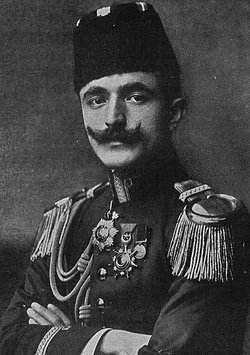
I couldn't help but take notice that the people were exceedingly Westernized. The men were all a blast from the Ottoman past--wearing skullcaps and bearing the thick, bushy mustache once associated with men like Enver Pasha. The women, many of whom were strikingly beautiful, wore makeup, blue jeans, and had no veils or headscarves.
In contrast to Egypt and Jordan, it was the women who sat out in front of the shops and stores. This was an interesting marketing strategy to say the least.
"There's a pita place," Dustin pointed out.
The radar in his stomach was finely tuned.
We crossed the road, looking every bit like a couple of amateur hikers on a tourist visa, and asked the round-cheeked, mustachioed owner for a couple Druze pitas. The man flashed a grin, minus a few teeth, and invited us to sit down as he oven-baked the pitas for us. His daughter, sitting out in front of the store next to us, walked over and fixed some olives and tea for us as the man's five year old granddaughter examined the two American aliens sitting in her grandfather's pita shop.
The tea was piping hot. The pita was as fantastic as Liran had advertised. I was admittedly a bit concerned about the intake of such spicy food prior to a camping excursion into the Golan outback, but at the time found myself nonetheless content.
We finished up, paid the man, and set out in search of the trail's starting marker. Dustin had put together a packet filled with maps and checkpoints for the trail on his thumb drive. Unfortunately, there had been no time to go to a print shop before the Pesach holidays. This meant that we were essentially running the Trail blind.
He had had the foresight to tear a map of the Golan out of the MASA handbook given to us during our first week in Israel.
Passing the two "shootout" between the two Druze boys and the invisible forces of evil, we marched throughout the town for the better part of half an hour in search of the trail's starting point. Despite speaking Hebrew to the residents there, none of them seemed to know what we were referring to. And hardly anyone spoke English.
Circling back toward the pita shop and past a massive statue commemorating either an event or people from long ago, we decided to move back down the mountain-side interstate in the general direction of the south. We were lost. And people either didn't understand us or didn't know where we needed to go.
Along the way, Dustin informed me that there was a location about half a kilometer east of Majdal Shams known as the "Shouting Hill." Since the city literally sat on the Israeli-Syrian border, the Druze in Majdal Shams had been separated from the Druze across the border following the Six Days' War. Thus, they developed a megaphone system on a hill just inside the Israeli border that they used to "shout" to their Druze neighbors in Syria to tell each other about the latest news.
This, apparently, was a weekly ritual that had been going on for quite some time. Imagining something straight out of Dr. Seuss' Horton Hears a Who!, I quietly placed the "Shouting Hill" on my future to-do list.
Furthermore, Dustin explained that most of the Druze in Majdal Shams were actually Syrian citizens. In an effort not to upset the delicate balance in their newly acquired territory following the Six Days' War, the Israeli government had agreed to allow the Druze to technically remain Syrian citizens. In return, the Druze more or less assimilated into the Israeli political system and helped the Israeli economy via their cherry and apple orchards.
And should there ever be a peace agreement between Syria and Israel and a return of Majdal Shams to Syrian territory, the Druze living in Majdal Shams would have the "political cover" to avoid reprisal attacks from their brethren or from other Syrians. They would be able to claim that they had always remained Syrian despite being in Israel. Apparently, the Druze in Majdal Shams are quite a bit wealthier than their coreligionists just a kilometer over in Syria. In turn, a degree of resentment has been born within the Druze community.
Israel, knowing that the territory might one day return to Syrian hands and knowing that retribution might face the Druze, did their part to help protect them should the day ever come.
Apparently the kid's Rotary Ambassador experiences had paid off with a wealth of uncommon knowledge. I was fairly impressed with the degree of detail that Dustin had concerning the Druze--a group we had rarely discussed thus far in our MAMEH program.
I glanced down at my watch to see that it was almost 2:00 p.m. As we continued to shuffle along the road and down the mountain, Dustin finally let out an exclamation of surprise.
"There it is!"
I turned to my left, shielding my eyes from the furious wind blowing in from the northwest to see a small stake with a white, green, and blue marker attached to it--the sign for the Golan Trail.
It's go time.
***
The forested slopes of the Trail were riddled with evergreens, jagged rocks, and flesh-ripping thorn bushes. We maneuvered at a steady pace, careful not to stumble and plummet down the foothills of Mount Hermon's base. We passed a broken water main, its contents dribbling down a dusty trail.
The first thirty minutes of the first day's hike gave way to a fantastic view of the Golani hills, valleys, and the distant mountain top castle of Nimrod Fortress. Built by the Assassins in the 13th Century under the auspices of Saladin's nephew Al-Aziz Uthman, Nimrod Fortress was a towering, sprawling edifice that harkened back through time to the age of the Crusader wars. The Jews named it Nimrod after the eponymous hermit resident that had once lived atop its summit.
The march down the forested slopes led to a hilly highway south of Majdal Shams. As we approached, Dustin and I saw what appeared to be 'tepees' at the summit on the horizon.
"Dude, are those...tepees?" I asked in utter disbelief.
"I...uh...I think so," Dustin said with a surprised guffaw.
We stopped for a moment and pulled out our cameras.
"What do you think?" I asked as I lined up the picture. "Slots on the right, Blackjack on the left?"
"You're going to hell, man."
***
I was sweating profusely by 3:30. The hour and a half march in the windy, sunny afternoon had taken us past several "pools" that the Druze had constructed as part of an innovative irrigation system, a former mosque-turned-youth center, gritty farms, and a pack of beleaguered Israeli hikers heading in the opposite direction.
"Ooh, check that out," Dustin said as he pointed toward the asphalt.
I looked down and nearly screamed as I leaped back. Dustin mixed a hearty laugh with a few well-placed jabs at my masculinity. A dead Palestinian viper lay directly beneath my feet. It had been run over by a car relatively recently. Knowing all too well that where there were babies, there was a mother nearby, I repressed a shudder and continued to move forward.
"Sheket (Quiet)," I replied. "If I see one of those damn things on this trail..."
"I used to grab 'em by the tail when I was a kid in Missouri and swing 'em around my head," Dustin announced proudly.
"Do you want a medal?"
Soon, we found ourselves moving through the town of Mas'ada, not to be confused with the ancient fortress of Masada found in the south of Israel in the Negev where Jewish rebels fought the Roman Empire in the infamous siege in 72-73 A.D. The sun was already brutally sapping our strength. By the time we came upon the Ram Pool (i.e. Lake Ram) on the eastern outskirts of Mas'ada, it was time for a water break.
Ahead, we had to prepare to maneuver through a thick forest. Dustin had wisely prepped his CamelBak to slip through his backpack and clip to his shoulder strap, allowing him access to water whenever he needed it. I was less creative and opted for accessing the two-liter Ein Gedi water bottle strapped to my left hip, feeling the CamelBak was more or less a resource of last resort when my water supply began to get low.
The mid-afternoon in the forest was an amazing testament to the diversity of Israel. The Trail wound its up through thick groves of pine and deciduous trees in a landscape that could have been ripped straight out of Chewacla back home. The cool mountainous wind from Mount Hermon, now easily eight to ten kilometers behind us, still cut its way through the forest canopy.
I scanned my left and right looking for any unseemly wild life that might be creeping about as Dustin temporarily took the lead.
Part of me flashed back to when I was a kid running around Piedmont or running through the woods behind Uncle Bill and Aunt Dorenda's house with Evan and Brad on a hot summer day. One particular instance came immediately to mind. I was eight and Brad was seven. We had been trudging through the woods near Rocky Brook road when I made out a cottonmouth sitting on a log. My phobia of all thing serpentine had taken hold and it had required the fearless persistence of Brad to get me to move out of the woods and back to the driveway.
You know, Drew, you sure can be a big baby, I thought as I moved to catch up with Dustin.
A rustle beneath my feet snapped my head down. Nothing. To both my relief and concern.
Way to prove yourself right on that one, champ.
***
By 4:30 p.m. we were moving back up hill and out of the wooded slopes beyond Mas'ada. Rugged Druze farmland, embedded on the rock-strewn soil on the jagged hillsides of the Golan, were on both our right and left. And the rocks were not mere pebbles--they were the head-sized boulders that smothered the topsoil.
We saw a young Druze boy in a yellow shirt hacking away at the soil, clearing the rocks away for a future harvest. How these farmers had managed to create vast, thriving orchards of cherry and apple trees I will never fully understand. It is nothing short of a miracle and speaks to their ingenuity and tenacity.
An Ottoman-looking man in a tractor sputtered down the road beside us. He waved as his mustache covered his smile. I figured that they were probably used to seeing hikers and travelers march through their farms during the Spring and Summer. All of them were friendly and called out to us with cries of Shalom or yom tov (good day).
Friendly and hard-working, I was nothing short of impressed with the Druze.
"How we doing on time?" Dustin asked with heavy breath. I glanced down at my watch. It was ten minutes after 5:00. We had been hiking for over three hours straight. The sun was starting to wind its way down as late afternoon settled upon the Golan Heights. The orange light basked the orchards in a heavenly glow. The distant thrum of a tractor was the only sound we could hear.
This is freedom. This is peace. Just God, man, and nature. This is how things should be.
"We'd better find a place to sleep soon," Dustin pressed.
"We'll camp at the next town."
Moving our way up a steep dirt road toward yet another hill top, we heard a car rumble up from behind us. A pair of middle-aged Israelis in an old van drove past us and waved.
"Wonder what they're doing?" I asked rhetorically.
We soon found out.
***
The top of the hill was more like the top of a mountain that we had gradually been ascending for the past hour. The grassy plateau at its peak was marked by a large military installation unlike anything I had ever seen before. Following the Trail, we moved up toward it and realized that it was an abandoned Israeli bunker and outpost.
A relic of the 1967 and 1973 wars.
Before we decided to explore it, we saw four hikers a little farther ahead standing near a wooden plank jutting out of the ground.
"I'm going to go ask them where we can get water and sleep," I announced.
"Fire away, chief."
The four Israelis, two guys and two girls, appeared to be taking a tea break as we approached.
"Shalom, eifo anahnu yacolim liknot mayim," I asked as I shook my now near-empty water bottle.
The Israeli nearest me, a curly-haired girl in her mid-twenties, smiled and responded in Hebrew so fast it caught me off guard.
"Uh..." I stammered.
"Americans, right?" the guy serving the tea stated more than asked.
"Yea," we answered in unison.
"We're almost done for the day so you can have this bottle," the girl said in perfect English.
"Thanks," I replied.
The other two Israelis, hiding behind their sunglasses, were thoroughly amused.
"Tea?" the young man asked. "It's mint tea. Very good."
"Sure. Sounds great. Thank you."
"Where are you two going?" the girl asked.
"We're hiking the Trail so we're looking for a place to camp tonight," Dustin replied.
"Okay, Buq'ata is the next city. Are you planning on staying there or on one of the kibbutz nearby?" the girl asked us as the man handed Dustin and I two cups of tea.
"We're not really sure," I answered.
"Where's your map?" she asked, a hint of incredulity creeping into her voice.
Dustin and I exchanged amused looks.
"Go ahead and show her the map, Dustin," I encouraged.
Dustin pulled the wrinkled, ripped MASA map out of his pocket and handed it to her. It was pg. 147 of the MASA guide to be exact. On it was a map that could have passed for being in a kid's geography book.
"This...this is your map?" the girl barked in disbelief.
A burst of laughter emanated from all of the Israelis. Dustin and I started laughing, too. Clearly they had been expecting a topographic map of the Golan Trail. What they received in return was a hand-sized piece of paper out of tourist guide.
"Where are you from?" the young man asked with a big grin.
"Missouri," Dustin said with a wide grin.
"Alabama," I quipped with a smile.
"I could tell from your accent," the girl said, her tone now softer than it had just been. "Al-uh-bay-ma!" she exclaimed with a laugh.
"I take it you've never hiked up here before," the young man inquired.
"Nah. We figured we'd just pack up and roll out," I explained. "Charge blindly ahead with absolutely no idea what we're doing or what we're getting ourselves into."
"Like good Americans, huh?" the young man responded in good cheer.
"Now you've got it," I replied.
The next few minutes the two Israelis who had been talking with us showed where we needed to go while the other two stood off to the side and adjusted their backpacks. Apparently, we needed to reach the other side of Buq'ata. With it already being nearly 5:30, it was going to be a race against time to make it there before sundown. We could make the town out on the horizon to our east.
"What are your names?" I asked.
"Gil," the man said.
"Leor," the girl replied.
"We're Dustin and Drew. Nice to meet you. Appreciate the help," I said.
"Well, Dustin and Drew from Al-uh-bay-ma, I'm sure we'll see you again," Leor said as they packed up in preparation for their hike ahead.
"With a map like that, I'm not so sure," Gil added.
***
The bunker at the top of the mountain was one of the most amazing sites I had witnessed. Dustin and I crawled through the complex like a couple of kids hitting their first playground. And in a way, it was a playground--a playground for grown-up military-obsessed boys.
The construct itself resembled something straight out of a HALO video game.
Mount Hermon and Majdal Shams towered in the distance as the sun crept toward its evening appointment with the West. And for a brief moment, I marveled at how far we had hiked in such a short amount of time and the immense majesty that was the Golan.
"We probably need to get a move on," Dustin said as we stood atop the bunker. "We've got a long day tomorrow."

Downtown Majdal Shams.

Shoot out!

The beginning of the Golan Trail.

Nimrod Fortress in the distance.

Camp...Navajo?

A sign outside of Mas'ada.

Keep up Jack Jack!

Seeing the forest for the trees...

Light in the forest.

Druze orchards with Mountain Hermon in the distance.

Sun setting on the Druze farmland.

Approaching the bunker atop the mount.

Burning back the sun.

Atop the bunker with Mount Hermon in the distance. The city high up on its slopes is Majdal Shams, where the day began. the city below it is Mas'ada.


 Posts
Posts


No comments:
Post a Comment